


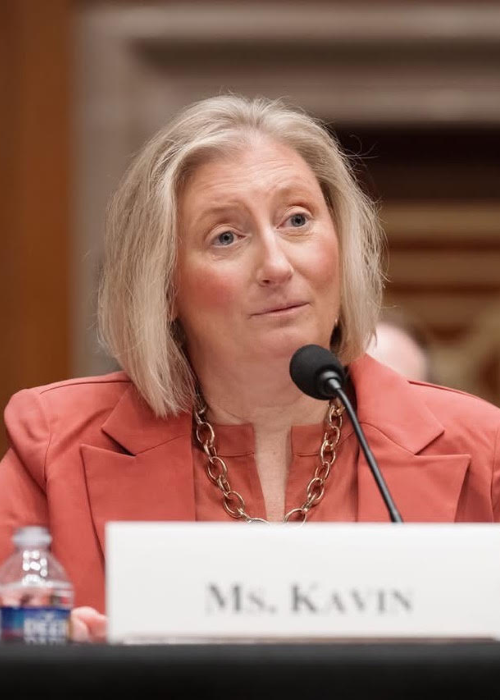

For Kim Kavin, being an independent contractor is about more than earning a living. It means having the freedom to build a career on her own terms.
But when New Jersey threatened that freedom in 2019, she found herself fighting not just for her own livelihood, but for the rights of other contractors across the country as well.
A little more than 20 years ago, Kavin decided to branch out on her own and become an independent contractor (IC) after a decade of writing in newsrooms. Part of the reason why, she said, is because she realized ICs could earn more. She also knew there weren’t enough opportunities for her as an employee to climb the ladder—men held all of the top positions.
She’s spent the last couple of decades happy with her decision.
But in 2019, she realized the success she’d achieved was at risk as New Jersey officials began considering what is known as the three-pronged ABC test—a proposal that could restrict who qualifies as an independent contractor.
“I just went down to the state House thinking, ‘This has to be a mistake,’” she told IW Features. “‘Why would anyone want to hurt me? I’m not bothering anybody. I’m paying my taxes and mowing my lawn and being a good person and just trying to earn a living.’”
The injustice of the proposed policy lit a fire in her… Independent contractors are involved in every industry, and this law could hurt them, she argued.
When Kavin started fighting for independent contractor rights, she had no political or advocacy background. She didn’t know how hearing processes worked or where to start. But bit by bit, she found her way into the system.
That same year, she started a grassroots movement against the ABC test. She has spoken in Congress three times and served as the lead author of a U.S. Supreme Court amicus brief. She’s also won several awards for her work.
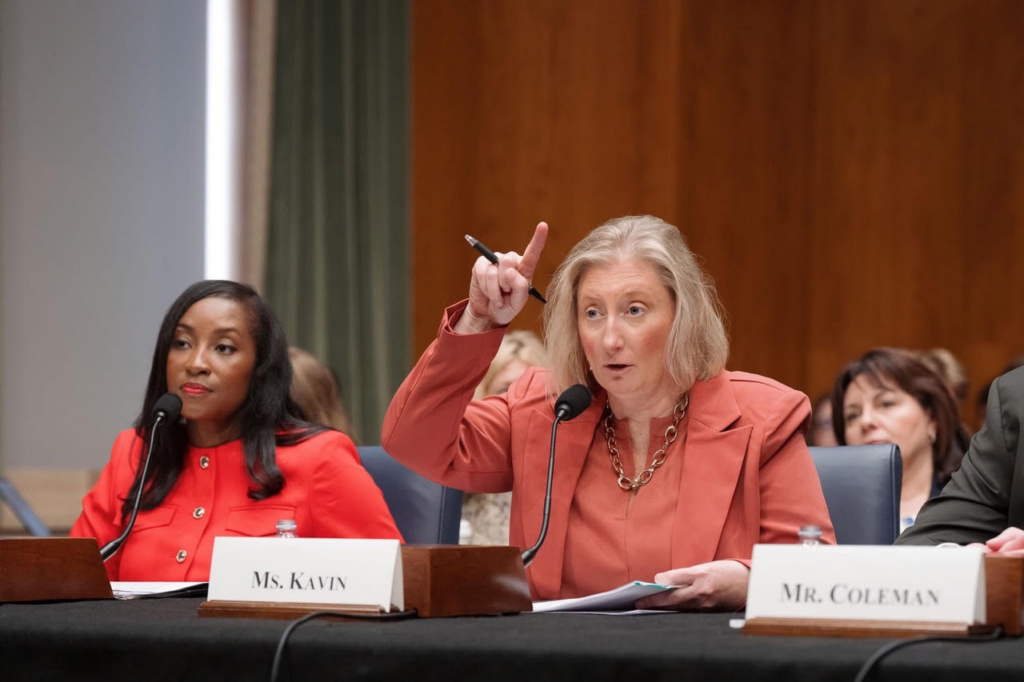
“People have been allowed to be our own bosses in this country since the day the nation was founded,” she explained. “This is the American dream: to use your skills and your abilities in a way that you set your own course. You pursue liberty and happiness. And the notion that we’re going to try to shut down this entire pathway to the American dream that tens of millions of us are currently on? I just think that’s insane.”
New Jersey’s Democrat officials have pressed forward with their new regulations anyway. And on Oct. 1, those regulations took effect, clarifying how the state applies its ABC test.
The test requires businesses to meet three criteria before classifying a worker as an IC. Like California’s AB 5 law, New Jersey’s regulations state that companies must prove that independent contractors work without their control, perform work outside the usual course of the business or its places of operation, and maintain an independently established trade or business. If a company cannot meet all three requirements, it must classify workers as employees rather than independent contractors.
After years of fighting to stop the new rule, Kavin is frustrated to see her concerns become reality.
“What they’re doing is trying to create a test that people can’t pass,” she said. “Businesses should be able to work with independent contractors. Independent contractors should be able to work with businesses. What’s happening is just wrong.”
She continued: “We just had a hearing in our state Senate. It was senator after senator saying that they’re asking accountants, they’re asking lawyers. Nobody can tell them how to actually pass this test,” she said.
The results out of California, which was one of the first Democrat-controlled states to restrict independent contracting, should have given New Jersey officials pause. California implemented AB 5 in 2020. Just four years later, the California State Advisory Committee to the U.S. Commission on Civil Rights documented evidence concerning AB 5’s disproportionate impact. Women, immigrants, people of color, and politically powerless groups were the most affected.
Indeed, independent contracting holds particular significance for women. As Kavin found, leadership opportunities in traditional employment remain limited. Statistics show the majority of business owners with employees in the U.S. are men. Women own only 22.9% of employer businesses. They hold just 11% of CEO positions at Fortune 500 companies and make up 33% of chief executive positions nationwide.
Independent contracting gives women a way to work for themselves. It offers them flexibility and control over their schedules that they can’t find elsewhere. Women shoulder the majority of responsibility for child care, elder care, and other caregiving duties. Freelancing allows women to set their own hours. They can work as much or as little as they want while managing their other responsibilities.
But for Kavin, the freedom to work as an independent contractor isn’t just financial—it’s personal.
Several years ago, a man attacked Kim from behind as she walked into her apartment building. The man was carrying a knife and had previously assaulted another woman. She lost consciousness during the attack and nearly lost her life that day.
Working for herself has helped Kim cope with severe, acute PTSD after the attack. She couldn’t handle it when coworkers came up from behind and tapped her on the shoulder. Part of her PTSD also included severe insomnia. And she was grateful she didn’t have to be constrained by work timings.
Working as an independent contractor allowed her to earn income in a way that was best for her while she coped.
“You can’t do that as an employee. I could do that as an independent contractor. It helped me to heal,” she told IW Features.
Kavin warned that efforts to restrict independent contracting are spreading nationally, heading toward the federal level.
“What this is about is freedom to choose,” Kavin said. “Do we want to be able to choose how we work? … Having the ability to work in whatever way works best for me—that’s the American dream.”