
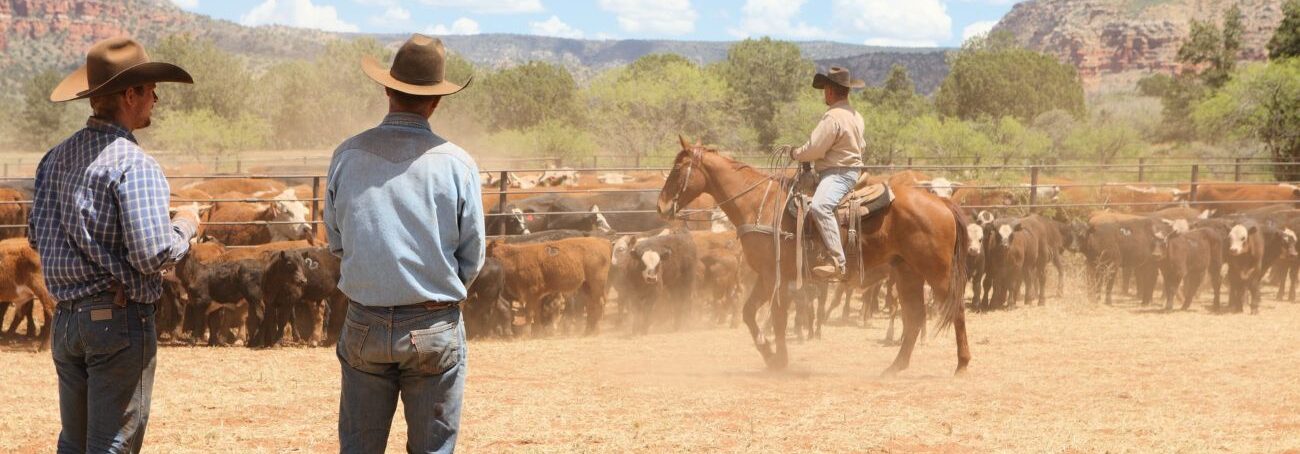

Casey Murph is ranching the same Arizona land his family has stewarded since 1904. But that generational legacy could soon come to an end, thanks to solar companies and Arizona’s “green” energy push.
“My family were some of their original pioneers to come to this part of the state. [They]… started in the 1870s,” Murph told IW Features.
Because Arizona has extensive public land acreage, his family—like many Arizona ranchers and farmers—has relied on a state land allotment for their livestock to sustainably live on. While not permanent ownership, these land allotments are not as temporary as a typical lease arrangement, Murph said, and many are passed down through families.
“Unless something really extreme happens, when you have an allotment, you can usually count on renewing it every 10 years,” he said. “We’ve renewed ours every 10 years for more than a hundred years now.”
Then, in 2021, Murph received a letter from Arizona’s land department. A company had applied to have the land transferred to them for a solar installation, the letter informed Murph. Included with the letter was a map of the impacted area, which included Murph’s land, totaling approximately 30 square miles.
At first, Murph said he tried to send complaints to the Arizona State Land Department. But when his outreach was unfruitful, he decided to take his plight public. It was an uphill battle to reach a listening audience, but his son helped him start social media accounts. Murph said he “started screaming from the rooftop” about what was happening, and soon, even Secretary of Agriculture Secretary Brooke Rollins was sharing his story.
Despite the traction his story has received, Murph said there has not been official movement by the state to preserve his land allotment. And now that midterm elections are over, he predicts that the state will redouble its efforts for the solar project. Under the current state administration, Murph said so-called renewable energy has received priority consideration with Democratic Gov. Katie Hobbs signing an executive order to expedite solar and wind energy projects on state land. As a result of that order, a new task force created a map of state lands color-coded for solar development favorability.
“Then they made that map available to all the big wind and solar conglomerates who mostly come from overseas,” Murph said. “They could just look at a map and see where the best sites were, and then they were encouraged by the state to apply for them.”
Murph isn’t the only rancher he knows who has faced eviction from a solar company, he said. A few years ago, some of his neighbors and relatives also received notices that their land would be taken and used for solar installations. And when Murph started researching the topic, he discovered a report from the Nature Conservancy that revealed 250,000 square miles of land, bigger than the entire state of Texas, could be affected if America went all-in on renewables. The report later revised its number down but still estimated that the renewable effort could consume 199,000 square miles, which is the size of Wyoming and Colorado put together.
“I think most people don’t realize that if we are going to continue down the path of a renewable energy transition, that it’s going to affect that much land,” Murph said. “I think most people would prefer to have their wildlife habitat and their wild open landscape kept intact.”
Even beyond farmers and ranchers, Murph said that Arizonans can expect to lose recreational and hunting land due to solar installations. He added that Arizonians’ property values “have gone down significantly” near these installations.
“People who move to this part of northern Arizona move here primarily because they want to engage in outdoor activity and enjoy the wild landscape,” he said. “When you take that away, there really isn’t very much left that makes the place attractive for people.”
Unfortunately, this isn’t an issue isolated to Arizona. Across the country in New York, Alexandra Fasulo discovered solar companies buying up prime farmland and targeting rural communities for cheap acreage, as IW Features previously reported.
“I’m personally not against solar in every instance. I think off-the-grid homesteads and things like that… parking lot arrays are fine. I just personally hate to see them all out on open lands in this way,” Murph said. “[The required land] is not going to be attainable without Soviet-style land seizures.”