

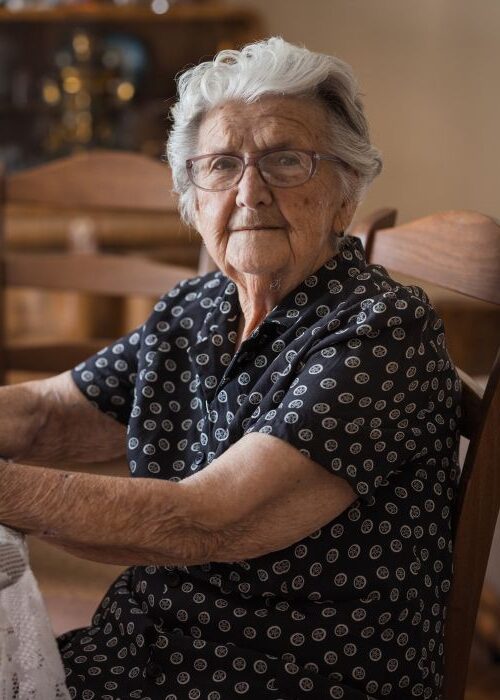

A person can do everything right—save money, invest, and have insurance. But Linda Fisher, whose mother is 99 years old and still lives on her own, realized that even all the planning in the world isn’t enough as one ages.
Fisher’s parents took steps years in advance to set themselves up comfortably. Like many seniors who want to continue to live in their home as they age, rather than in an assisted living or senior care facility, they sought out long-term care insurance in preparation for aging.
Her father passed away in 2001 before he was able to use his insurance plan. Her mother, however, has utilized the policy. But as Fisher’s mother continues to age and requires more care, insurance isn’t enough.
“I went through five different caretaking services over the years,” Fisher told IW Features. “A consistent challenge we encountered was that many caretakers did not have formal certifications, with most of their training provided in-house. In recent years, we have had some compassionate and dedicated individuals.”
A way to approach this issue, according to Fisher, could be to strengthen in-house training for caretakers, making professional certifications more accessible. Many agencies, however, do not currently offer or fund that training.
“Among the five caretaking services we used, many of the caregivers did not appear to hold formal certifications and were primarily trained in-house,” Fisher said.
Sometimes, this meant a caretaker was not a good fit because she did not have the appropriate skills to care for Fisher’s mom, who is legally blind. Other times, the family had safety concerns with the caretaker.
Fisher’s parents grew up during the Great Depression. Her father was in the Navy and served during World War II and the Korean War. Married at 18, her mother raised five children and wore many hats in the family, including homemaker, secretary, and bookkeeper. Fisher’s mother’s independence was learned from these life experiences.
“I’m 77 years old, so I’m very fortunate that I’m still able to move around and be a caretaker for my mom. But it’s just sad to think that we don’t, in this country, take care of our seniors,” Fisher said. “If you really look, and when you’re seeing the systems and how they break down, I think we’re lacking there.”
Fisher is grateful her parents had the foresight to get long-term care insurance, but the policy has limitations, which have been a challenge in itself. The insurance provider first has to send someone to the senior’s home to evaluate the patient’s Activities of Daily Living (ADLs)—bathing, dressing, eating, transferring (moving), toileting, and continence—to determine the amount of care the senior qualifies for.
“I think she had three or four [ADLs] when she started needing the caretaking service, and then it was only a couple of hours [she qualified for],” Fisher explained.
Today, Fisher’s mom qualifies for full care.
Fisher said she believes the threshold to determine the amount of care a senior receives is set too high.
“Those are not easy qualifications to meet to get that care. The fact that she can’t see means cooking, which she loves to do, is an issue,” Fisher said.
For Fisher, waiting for her mom to meet the full-care threshold was frustrating, especially when her parents had paid into long-term care insurance, and the family assumed they would be able to use it to its fullest extent.
Even with the hurdles long-term care presents, Fisher’s mom loves living at home. The family wants to keep her home so she can be happy and comfortable.
“She has a lot of space. She can go from room to room. She has a sun room where she can walk out into it and watch the birds,” Fisher said. “I love my mom, and this is what she wants, and as long as she is well enough, and we can provide the caretakers—or we can pitch in between—then we want to keep her where she wants to be.”
Fisher lives two doors down from her mother and visits almost every day. Even with the 24/7 care, Fisher remains extremely involved and active in her mother’s life, pitching in wherever she can.
Fisher is her mother’s advocate, her point person, continuing to play a central role in her care. That is why she is so passionate about advocating for seniors in America.
“There are many, many people like me who are doing this for a family member,” Fisher said. “A takeaway for this whole experience is that a person who is aging, you want them to age with dignity, and that shouldn’t depend on being lucky, by having a good caretaker or good long-term care.”