




Camille Kiefel remembers sixth grade as the inception of a long effort to run from womanhood.
Growing up in Oregon, she points to two events that fundamentally changed the way she viewed her sex. First, her father told her that men his age sometimes made sexual comments about girls her age. And not long afterward, Kiefel’s best friend was sexually abused by her brother. Those experiences left her terrified.
“It was after that that I started dressing more masculine,” Kiefel recalled in an interview with IW Features. And eventually, she adopted a transgender identity and sought to abandon her female sex altogether.
Years later, she understands her response differently.


Transition for Kiefel “was a trauma response,” she said, though she sees the similarities in her own story among today’s youth who have fallen into the social contagion that is gender ideology.
When she entered high school, Kiefel said her mental health deteriorated. She became terrified of being alone and worried constantly about sexual assault. By her senior year, she said she had become emotionally numb.
“I started disconnecting with my body in senior year of high school,” she said.
But in college, she was introduced to the idea that a person could identify as non-binary.
Then, in 2016, she saw a mental health professional who specialized as an LGBTQ therapist. Despite Kiefel being on the fence about her “gender identity,” she said the therapist affirmed her interest in adopting a new identity. One comment from those sessions has stayed with her ever since.
“‘You must be non-binary because we used to think being gay was a form of mental illness,’” Kiefel recalled being told.
By 2018, Kiefel’s mental health had spiraled. She recalled feeling stuck in a toxic workplace, which led to her having panic attacks.
Ultimately, Kiefel went on long-term disability to try to get better and began attending dialectical behavioral therapy (DBT) sessions multiple days a week, every week. She tried medications and two rounds of a five-day treatment called transcranial magnetic stimulation therapy, where you wear a helmet that uses magnets to stimulate your brain.
“Insurance covered it since I was treatment resistant,” she recalled, “So I was doing all these things that were in the realm of conventional medicine, but I wasn’t getting better.”
Eventually, Kiefel reached out to her doctor to ask him about the discomfort she felt about her breasts. Keifel wasn’t identifying as transgender at this point and was not on hormones, which is generally the first step in transgender medicalization before surgery. Yet Kiefel was referred to two mental health professionals who put her on track for a double mastectomy to remove her healthy breasts.


“It was two Zoom calls, less than an hour each,” she said. “And then I saw the surgeon.”
What followed Kiefel’s procedure was a blur of health problems. Kiefel said she developed tinnitus, swallowing problems, vertigo, allergic reactions, and insomnia.
“I went to the ER multiple times because I thought I was dying,” she recalled.
The emotional fallout was just as severe for her, and Kiefel said the procedure destroyed her confidence in dating, too.
Ironically, it was while searching for answers to her multitude of physical symptoms following the double mastectomy that her mental health finally began improving. After years as a pescatarian, for example, Kiefel heard about Mikhaila Peterson’s “Lion Diet,” and though she didn’t go all-in on a carnivore lifestyle, she began eating meat again.
“I was shocked when my mental health began improving because I was doing all this mainly for my physical health,” she said. “At this time, I was starting to question if the procedure actually helped me, or if I was non-binary.”
Kiefel then began hyperbaric oxygen therapy treatment, which she said improved her ADHD from 72 points to six and her anxiety from 27 points to eight.
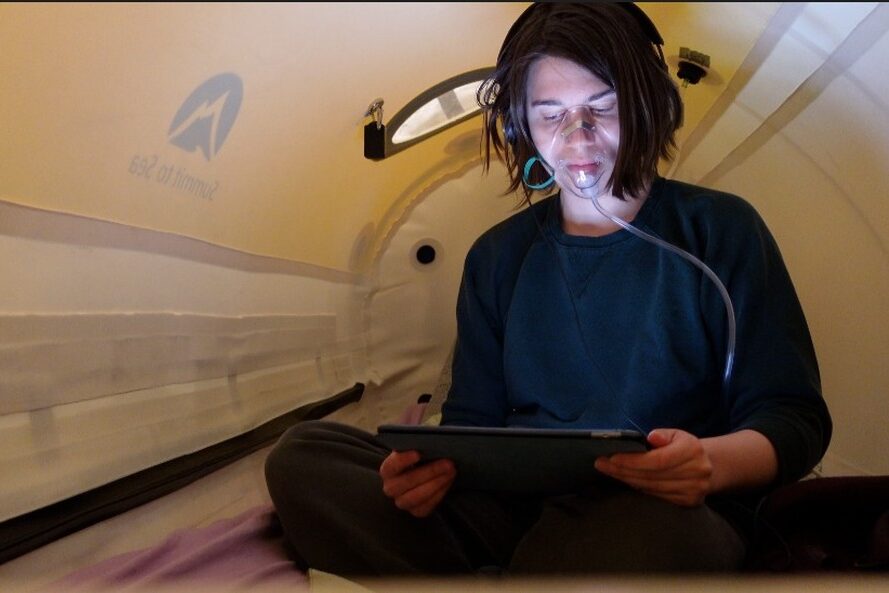
“I wish that doctors had looked at my physical health more,” she said. “There’s been a great disconnect between physical and mental health.”
After 60 treatments, Kiefel detransitioned, and national attention followed. In 2023, Kiefel filed a malpractice lawsuit alleging the providers failed to adequately account for her extensive trauma history and severe mental illness before recommending an irreversible double mastectomy. The case, which was set to go to trial in Oregon, was ultimately resolved through a confidential settlement in May 2026. But Kiefel said her years-long legal battle was never simply about compensation.
“I didn’t want what happened to me to happen to other girls and women,” she said. “You can’t make an informed decision if you don’t have all the information.”
When news of the settlement finally arrived, Kiefel recalled feeling a sense of relief.
“It’s nice to move past that part of my life,” she admitted.
Still, the consequences remain.
“And there’s a lot of like sort of cognitive dissidence around this issue and wanting to justify like, ‘Oh, well, you can just get implants later,’” she said. “That’s such a cruel mindset to apply towards the situation because you are removing healthy body parts from people who are really struggling, and you’re not willing to actually look through all the possible issues to see … why someone is struggling with gender.”
What’s more, if she were to get implants, Kiefel said her body could very well reject them.
Those pushing irreversible procedures on vulnerable individuals are far too quick to dismiss mental illness, Kiefel said, recalling the moments after her surgery where she’d have full-body meltdowns, and her mom would have to physically move her because she couldn’t move herself.
“Unless you’ve lived with somebody with severe mental illness, you don’t know what it’s like,” she said. “Then you see me now, and I’m a lot better. I’m not like 100% perfect; there’s always room for improvement with anything, but you see somebody, and they seem fine. You don’t always know what they’re going through.”
Today, Kiefel said she hopes the growing number of detransitioner lawsuits will force medical institutions to take stories like hers more seriously. She also started her own nonprofit, Detrans Help, as a resource for people just like her.


More than anything, she said she hopes that other girls who struggle with discomfort in their bodies understand they don’t need to become someone else to heal.
“I worry about the fact that they’re not giving these patients all the information they need to make an informed decision because they’re more concerned about trans individuals’ feelings, and you can’t make an informed decision if you don’t have all the information,” Kiefel said.
To those individuals, her message is simple: “It’s okay to be who you are,” she said. “You don’t need to change.”