
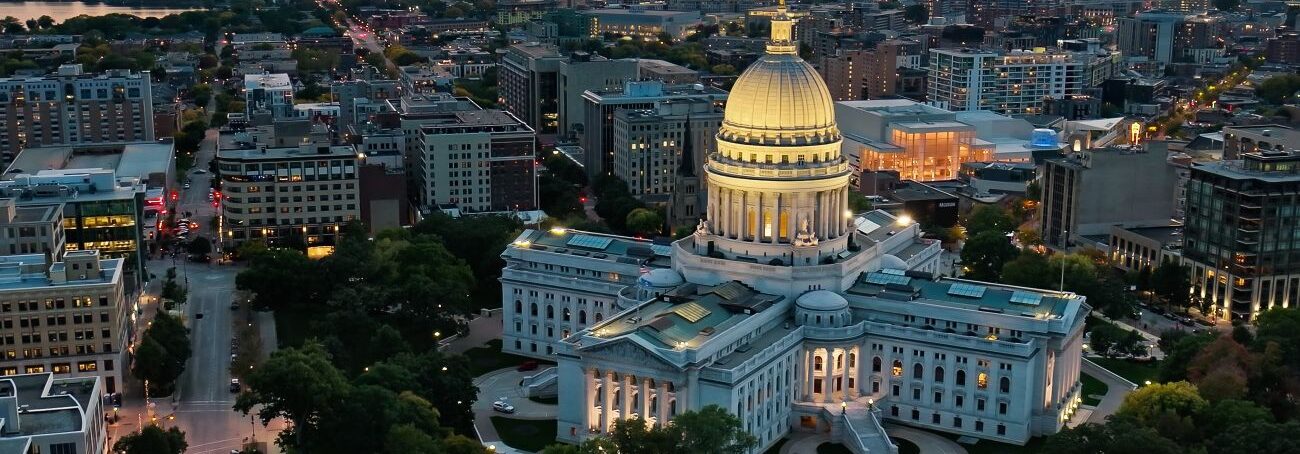

In the days following the officer-involved shooting of Corey Ruiz in Madison, Wisconsin, protestors set up a blockade in the heart of the city. The autonomous zone spanned several blocks, with activists parking their cars and setting up homemade barricades in an attempt to block off the intersection of Williams Street and Baldwin Street. The autonomous zone is similar to those set up in Seattle and Minneapolis during the 2020 Black Lives Matter protests, during which protestors declared their encampments as “law enforcement free zones.”
Typically, the neighborhood around Williams Street, known as “Willy Street” to the local community, is bustling, home to several of the city’s favorite restaurants, clubs, and retail shops, as well as to hundreds of residents. Unfortunately, as the encampment approaches its second week, Willy Street has fallen into sharp decline.
The zone is almost entirely occupied by homeless people living in cars and campers, many of whom are stealing power from people’s homes through extension cords. One local business owner told IW Features that a group of protestors sprayed graffiti paint all over his business and then claimed his property manager had “allowed” them to do so.
Trash has not been able to be picked up, and garbage has been flung everywhere. Despite portable toilets being brought inside the zone, the area smells of urine. Some nearby residents have seen homeless people defecating in the streets or sitting in groups drinking alcohol. Barricades are being reinforced with nails and glass, and many local residents have reported that the entire area feels “tense.”
One young Madison staffer whose daily commute passes near the zone said protesters circled his car and questioned him about where he was going and why. One woman biked past the encampment and noted how many inside seemed to be abusing drugs, as she claimed to have seen several men packing pipes with marijuana in the broad daylight.
One resident who has lived in the neighborhood for 40 years told IW Features that they were shocked by the city’s unwillingness to take action.
Indeed, some of the greatest victims in the zone have been the area’s local businesses and employees who have been shut out from their places of work. A GoFundMe was set up in response to their financial loss, as many restaurants and shops have either been unable to reopen or have reported significant declines in customer visits. Some businesses have reported as much as a 65% decrease in sales.
One female business owner claimed to have found rotten food, including several smashed eggs, outside of her shop.
Her problems don’t end there: “My sales have dropped like crazy. I have no idea how I’m going to pay rent, and it’s getting worse every day,” she told IW Features.
A local charity and thrift shop has been unable to accept donations since the autonomous zone was created. The store was closed for several days, and upon reopening, customers said they didn’t feel safe visiting the store.
“It’s been tough because most of the people down there aren’t really these businesses’ traditional customers,” said a Madison resident. “It’s even hard for the businesses many blocks away. I’m a moderate Democrat, and even my hardcore liberal friends have stopped supporting [the autonomous zone].”
Another woman living nearby said she had been “verbally attacked and harassed” by protestors in the area. She also said she asked her children to stay with her ex-husband, who lives in a different part of town, because she didn’t feel safe having them nearby. She expressed frustration that she wasn’t able to spend time with them before the school year began.
Although many of the residents were sympathetic to the protests after Ruiz’s death, the effects they have had on their community have turned them bitter. Even Madison Mayor Satya Rhodes-Conway admitted that the encampment could cost the city “hundreds of thousands of dollars.”
After nearly two weeks, authorities finally began clearing out the encampment, but immense damage had already been done. Madison officials did very little to help, including being slow to enact tow orders, detain homeless individuals, or find solutions for the businesses and residents. The city’s negligence has seriously harmed the community.