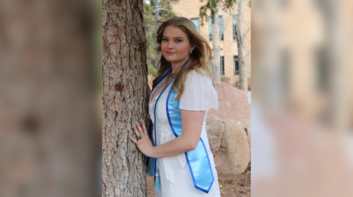


In a recent viral X post, Iranian dissident Tahmineh Dehbozorgi stated the obvious: “What the world is witnessing is the accumulated cost of allowing [the Islamic regime in Iran] to exist for nearly half a century,” she wrote.
She’s right. Trump’s military intervention in Iran is not a story of spontaneous escalation; it is the predictable consequence of decades of postponing confrontation with a regime whose ideology has always depended on repression at home and destabilization abroad. The violence unfolding now—felt in the streets of Tehran and across the region—is merely the price of delay, and the voices of Iranians who have lived under the regime are the clearest guide to understanding it.
For nearly 45 years, the Islamic Republic has enforced an ideological and expansionist agenda. Dehbozorgi knows this firsthand. She writes, “For decades, this regime has waged war on its own people and destabilized the world around it. Iranians have paid the price in blood: tens of thousands killed, thousands blinded, dissidents imprisoned, generations forced to live under repression.”
The regime’s internal violence is inseparable from its external ambitions. Through proxies, militias, and terrorist networks, it has drawn entire regions into conflict.
American soldiers and taxpayers have also felt the effects of Tehran’s ambitions. Every year the Islamic Republic survived made the eventual reckoning more painful—for Iranians, for Americans, and for the world. As Dehbozorgi bluntly warns, “Bad actors do not become tamer with time. They become more dangerous.”
Western debates about constitutional procedure or executive overreach obscure the moral reality. Dehbozorgi, a litigation fellow at the Institute for Justice, critiques past presidents for failing to act decisively: “President Carter’s catastrophic decisions surrounding the 1979 revolution…directly helped midwife the Islamic Republic into existence. President Obama negotiated the nuclear deal by intentionally bypassing Congress…poured legitimacy and economic oxygen into a regime whose core ideology was ‘wiping Israel off the map.’ President Biden subsequently eased financial pressure…that subsequently funded militias that attacked Israel on October 7th.”
The cumulative effect of these actions has been to allow the regime to persist and grow stronger.
Dehbozorgi, who speaks about her experience living under the Islamic regime to American high schoolers through the Dissident Project, captures both the grief and moral clarity that many Iranians around the world now feel.
“My heart breaks when I see the city I grew up in flames. But what breaks it even more is knowing that this suffering…was compounded by years of your denial about what this regime is,” she wrote in a recent post.
Listening to those like Dehbozorgi who have lived under the Islamic Republic offers insight both into the human cost of delay and the strategic lessons that can guide policymakers today. It also underscores the danger of indefinitely postponing confrontation.
Indeed, the lessons learned here are not limited to Iran. As the world contemplates China’s rising power, leaders can see in this the same pattern: a delay in confronting authoritarian regimes only magnifies future costs. Deterrence delayed, Dehbozorgi reminds us, becomes conflict multiplied.
The Trump administration seems to understand this better than most. Some analysts argue that President Trump’s recent U.S. military operations in both Iran and Venezuela have a broader geopolitical logic connected to Beijing, aimed at weakening strategic partnerships that bolster Chinese global influence, from Tehran’s oil exports to Venezuela’s role as a key purchaser of Chinese weaponry and a market partner. China’s strong diplomatic objections to U.S. actions in Venezuela underscore how Beijing perceives such interventions as targeting its interests in Latin America, even as it refrains from direct military confrontation.
The fact that we have a president willing to act with such clarity and foresight, recognizing the interconnections between toxic regimes, regional stability, and great-power competition, is a rare and precious thing in global politics.
That’s exactly why President Trump’s actions in Iran have been met by overwhelming support from the Iranian diaspora around the world. For generations of Iranians, the Islamic Republic has been a prison; for the world, it has been a source of avoidable conflict. And as Dehbozorgi concludes, “The world is not facing this moment because we finally acted. The world is facing this moment because for decades, many refused to acknowledge the true nature of the Islamic Republic regime.”