


After Students for Fair Admission’s (SFFA) victory at the Supreme Court of the United States in 2023, university students were supposed to be guaranteed a fair chance at admission and scholarships. But many universities quickly put out statements doubling down on DEI or quietly continued or restructured existing DEI initiatives.
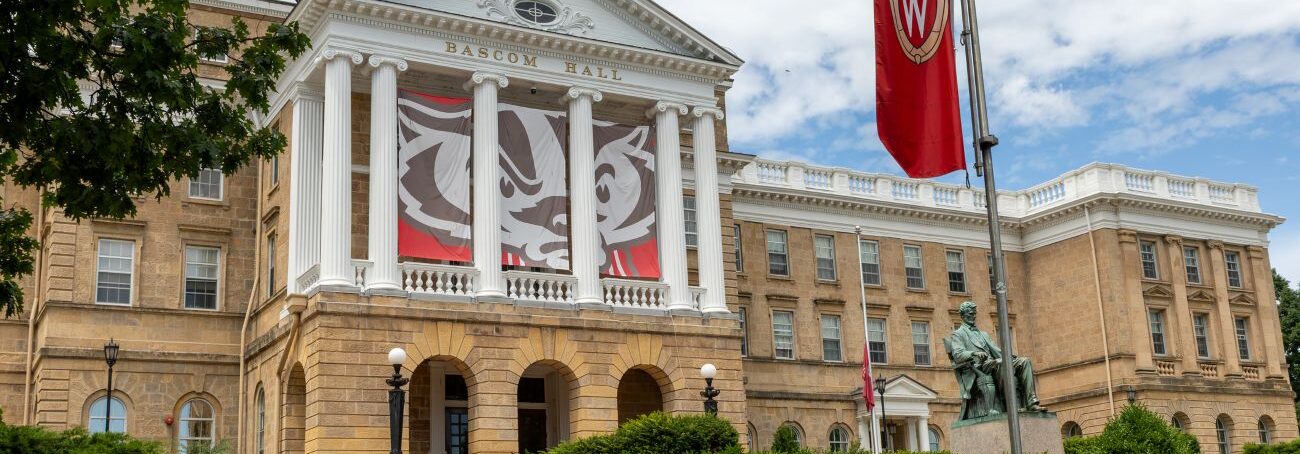
The University of Wisconsin-Madison is just one of these universities that have defied anti-discrimination law and court precedent. But that could soon change with a recent lawsuit filed by the Wisconsin Institute for Law & Liberty (WILL) on behalf of Young America’s Foundation (YAF) and Citizens Defending Liberty (CDL) to challenge these race-based programs.
WILL’s lawsuit points to UW-Madson’s administering “60 race-based scholarships and grants as recently as the 2024-2025 academic year.” In a complaint to the U.S. Department of Education’s Office for Civil Rights, the organization names over 20 scholarships and grants at UW-Madison that discriminate based on race.
“While progress has been made nationwide, there is unfortunately much work still to be done on this front,” WILL Deputy Counsel Rebecca Furdek told IW Features. “UW-Madison has indicated in the past (and currently does so on their website) that they believe they are complying with their obligations under the law.”
Indeed, UW-Madison’s financial aid website discusses its “Pool & Match” methodology that the university cites as its avenue to comply with anti-discrimination law. The university explains that they determine the quantity of financial aid each student can receive via “merit, need, major, GPA, or a variety of other non-identity based characteristics.” Then, that dollar number is met via scholarships which may be applied to individual students based on identity-based characteristics.
WILL, YAF, and CDL believe that this method is still discriminatory and illegal. As their complaint stated, “the U.S. Supreme Court has long recognized that even when ‘racial distinctions . . . were argued to have no palpable effect’ in practice, or were ‘in form merely nominal,’ the U.S. Constitution is clear: ‘Separate cannot be equal.’”
According to WILL, UW-Madison’s current policies do not pass the five tests for racial classification systems that SCOTUS laid out in SFFA. These five tests include:
- The program must align with specific governmental interests “remediating specific, identified instances of past discrimination that violated the Constitution or a statute” or “avoiding imminent and serious risks to human safety in prisons, such as a race riot.”
- The racial categories delineated in the program must not be “arbitrary, overinclusive, or underinclusive.”
- The program cannot discriminate against certain races.
- Race may not must be used as a stereotype.
- The program needs a “logical end point.”
Beyond the federal precedent set by SFFA, the Wisconsin Supreme Court ruled earlier this year that a race-based college financial aid program in the state is unconstitutional. Thus, with ample precedent on their side, WILL hopes to restore fairness to college admissions and scholarships.
While UW-Madison is the sole university named in WILL’s lawsuit, many other schools across the U.S. have turned to this “pool and match” method in an attempt to sidestep anti-discrimination laws.
By ending its participation in this method, Furdek said, “UW-Madison would join the many universities nationwide that have acknowledged their duty under the Equal Protection Clause, particularly in the wake of the U.S. Supreme Court’s ruling in SFFA, and changed course. In addition, we hope that this may encourage other universities using the ‘Pool & Match’ method to reconsider this method.”
In UW-Madison’s case, the scholarships in question are of concern to both Wisconsin taxpayers who help fund the distribution of these programs as well as current UW-Madison students. In WILL’s lawsuit, CDL represents many of these Wisconsin taxpayers who have an interest in holding officials to account for state spending. The other plaintiff, YAF, is an organization of conservative students across America and includes UW-Madison student members affected by the school’s scholarship policies.
Now, students and taxpayers wait for a response from UW-Madison, which WILL anticipates in mid-September, according to Furdek.
“Particularly as the cost of obtaining a college education continues to increase, students deserve to be evaluated for scholarships based on merit and the unique perspectives and contributions they may bring to campus—rather than be reduced to the color of their skin,” Furdek said.