

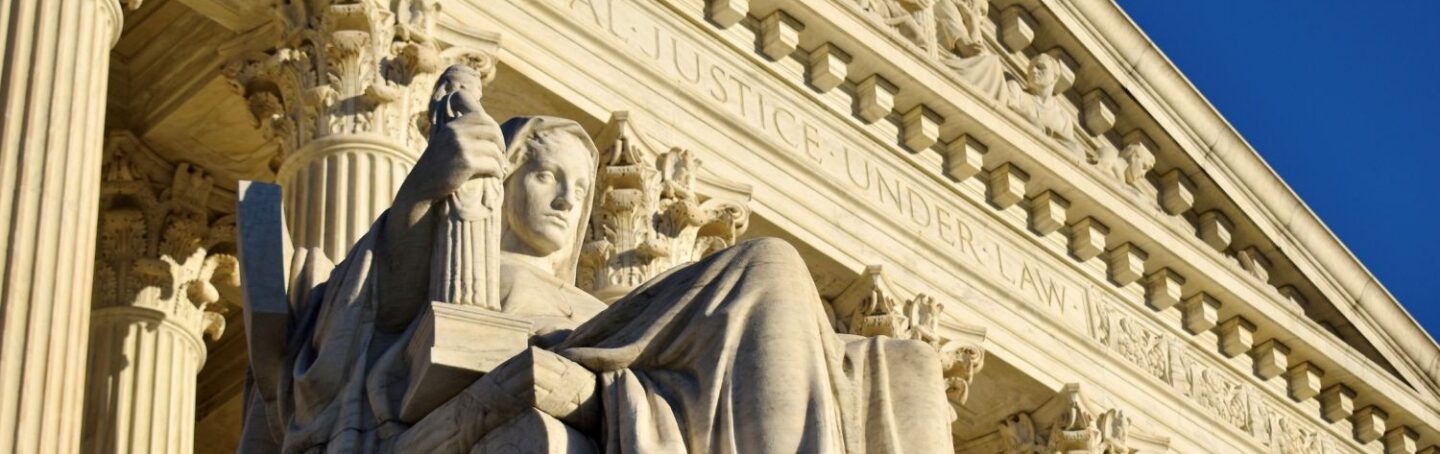

The United States Supreme Court has delivered what many legal observers are calling the most significant parental rights victory in a generation, ruling that California’s secret gender transition policies in public schools likely violate the constitutional rights of parents.
In a 6-3 decision issued March 2 in Mirabelli v. Bonta, the Court vacated the Ninth Circuit Court of Appeals stay that had blocked enforcement of a district court injunction against the policies. The ruling restores protections for parents across California and reaffirms that schools cannot conceal critical information about a child’s gender identity from their own families.
The case began with two California teachers who refused to deceive parents about what was happening with their children in school. Elizabeth Mirabelli and Lori Ann West, both teachers in the Escondido Union School District, challenged state policies that required educators to hide students’ gender transitions from parents and use different names or pronouns during school hours while concealing that information from families.
The Court’s opinion directly addressed California’s practice of allowing schools to socially transition students during the school day while keeping parents unaware.
“California’s policies conceal that information from parents and facilitate a degree of gender transitioning during school hours. These policies likely violate parents’ rights to direct the upbringing and education of their children,” the Court wrote.
In another passage that has quickly become central to the ruling, the justices stated that the policies “cut out the primary protectors of children’s best interests: their parents.”
The Supreme Court reaffirmed longstanding constitutional principles regarding parental authority, writing that “parents, not the State, have primary authority with respect to the upbringing and education of children.”
The Court also emphasized that parental rights extend to decisions involving a child’s mental health.
“The right protected by these precedents includes the right not to be shut out of participation in decisions regarding their children’s mental health,” the opinion stated.
The justices rejected California’s argument that secrecy policies were necessary to protect students, writing that staying those policies “promotes child safety by guaranteeing fit parents a role in some of the most consequential decisions in their children’s lives.”
Even the dissent acknowledged the central principle underlying the case. Justice Elena Kagan wrote, “I have no doubt that parents have rights, even though unenumerated, concerning their children and the life choices they make.”
The ruling reinstates a December 22, 2025 decision by U.S. District Court Judge Roger Benitez, who granted summary judgment in favor of the plaintiffs and issued a permanent class-wide injunction blocking the policies statewide. Judge Benitez also ordered state officials to publicly post a statement acknowledging that parents have a constitutional right to be informed if their child expresses gender incongruence at school. The required statement reads in part, “Parents and guardians have a federal constitutional right to be informed if their public school student child expresses gender incongruence.”
Attorneys representing the plaintiffs say the ruling represents a watershed moment for families nationwide. Paul M. Jonna, Special Counsel at the Thomas More Society and partner at LiMandri and Jonna LLP, said the decision sends a clear message to states across the country.
“The Supreme Court has told California and every state in the nation in no uncertain terms that you cannot secretly transition a child behind a parent’s back,” Jonna said. “The Court’s reaffirmation of religious liberty and parental authority sets a historic precedent that will dismantle secret gender transition policies across the country.”
Peter Breen, Executive Vice President and Head of Litigation at the Thomas More Society, said the ruling restores the proper relationship between families and the state.
“No more can bureaucrats secretly facilitate a child’s gender transition while shutting out parents,” Breen said. “California built a wall of secrecy between parents and their own children, and the Supreme Court just tore it down.”
California Gov. Gavin Newsom reacted angrily to the ruling. According to reporting by the California Post, Newsom told the outlet, “Teachers should be focused on teaching, not forced to be gender cops.”
Despite the Supreme Court’s decisive ruling, the legal battle is continuing. Shortly after the decision, California Attorney General Rob Bonta filed a motion asking the Ninth Circuit Court of Appeals to intervene once again.
And while the Supreme Court’s decision vacated the Ninth Circuit’s decision in favor of California with respect to the parents’ claims, the Ninth Circuit’s stay remains in place for a separate set of claims brought by teachers.
Bonta’s new filing asks the appellate court either to stay the portion of Benitez’s order requiring a public statement acknowledging parents’ rights, or to replace the district court’s language with excerpts from the Supreme Court opinion. In the filing, the attorney general argues that the statement ordered by the district court does not fully “track the reasoning in the Supreme Court’s decision.”
But even as these legal details are ironed out, for Mirabelli and West, the teachers who first stood up and filed the lawsuit, the Supreme Court decision represents a historic victory that reaffirmed a principle the Court stated clearly in its opinion: parents remain the primary protectors of their children and cannot be excluded from the most important decisions affecting their lives.
California is continuing its effort to limit the scope of the ruling. On March 6, attorneys with the Thomas More Society filed an opposition brief in the U.S. Court of Appeals for the Ninth Circuit, urging the court to reject what they describe as California’s attempt to circumvent the Supreme Court’s decision. Just days after the High Court restored the injunction blocking the state’s parental secrecy policies, California filed an emergency motion asking the Ninth Circuit to carve out a new “abuse exception” and to rewrite the notice informing school employees of parents’ constitutional rights. School districts across California have already begun implementing the injunction, and the Ninth Circuit is expected to rule as the case continues through the appellate process. The Supreme Court’s March 2 decision, restoring protections for parents against California Parental Exclusion Policies, remains in effect.