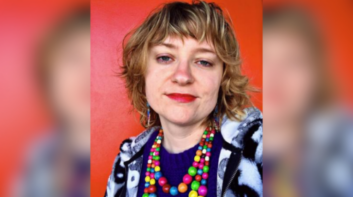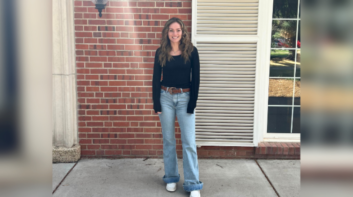




After going through puberty at just 9-years-old, Sabrina Anderson* thought identifying as a boy would be a way to escape her problems.
“I was on a family vacation, and I got my first period, and I was scared,” Anderson told IW Features. “I developed really fast, and I was just afraid of the whole process, and I was already struggling because I was a plus-size girl… So I just always felt kind of like the odd one out with other girls.”
Academic stress, her parents’ divorce, and a sexual assault added to her emotional load. By the time she was in middle school, Anderson was struggling deeply with her mental health.
Anderson said she first heard about transgenderism when the debate regarding trans-identifying men in women’s bathrooms became a mainstream news topic.
“I thought, ‘Well, I’m struggling a lot with womanhood and maybe I could do this,’” she recalled. “Maybe being a guy would just be easier for me in the long term.”
Anderson said she also believed identifying as a boy would make dating easier because she identified as bisexual.
At 14-years-old, Anderson said she began seeing a therapist and mentioned her gender dysphoria. The therapist did not question her much, and even referred her to Lurie Children’s Hospital in Chicago where she got her first testosterone prescription at 17-years-old.
“I feel like she wasn’t really as worried about the underlying issues of why I wanted to transition,” Anderson noted.
At Lurie Children’s Hospital, “[the provider] handed me this packet… you read through it, and you discuss the side effects [of testosterone], and if you’re OK with it, you sign,” Anderson explained. “After that, I got my prescription, and we went through my first shot pretty much within the same appointment.”
Then, after the discomfort of binding her breasts for years, she said a double mastectomy seemed like the logical next step. Anderson said her providers at Howard Brown Health gave her a referral to a surgeon in Ohio, and she was quickly able to get the procedure.
“I signed forms. I paid my part. Boom, surgery,” Anderson said. “It’s really just one form for everything, and then it’s done, which is crazy. I wish there was a little bit more barrier.”
After the surgery, Anderson said she felt apathetic about her body—rather than excited—and never got used to her new figure.
But this was only the beginning of the fall-out.
Subclinical hypothyroidism, high cholesterol, and a high red blood cell count are conditions Anderson said she developed from testosterone injections, even on a low dose. When she went on medications to treat these complications, her symptoms did not improve, she told IW Features.
Because of the hormone treatment, Anderson said she underwent bimonthly lab tests, but during one blood draw, she experienced vasovagal syncope, her brain was cut off from oxygen, and she had a seizure. Now, she cannot do the therapeutic blood draws that her doctors recommended to fix her high red blood cell concentration, she explained.
As an alternative, Anderson said she and her doctors decided she needed to stop taking testosterone to regain her periods and balance her blood cell count. However, stopping testosterone so suddenly gave her premenstrual dysphoric disorder and severe withdrawal symptoms, according to Anderson. She quickly had to go back on testosterone, and with the help of a doctor, she said she’s now carefully reducing her doses.
As all of these side effects weighed on her, 22-year-old Anderson said she decided to fully detransition.
“I’m really worried about heart disease because that runs in the family on both sides, so I don’t think I can deal with testosterone long-term,” she explained.
Anderson also emphasized that identifying as male did not help her manage the underlying mental health difficulties that led her to initially seek transition. Now, she’s seeing a different therapist to help heal these issues as she navigates how to embrace her female sex.
“Transition—it’s not exactly a movement or an identity,” Anderson told IW Features. “It’s a way to treat side effects in the end.”
The changing legal and political landscape is another reason Anderson said she decided to detransition. Indiana has become embroiled in a lawsuit against the American Civil Liberties Union over whether individuals can change the sex listed on their legal documents. And at the federal level, the Trump administration has issued executive orders recognizing biological reality and protecting female-only spaces.
Beyond the abstract political landscape, detransitioners like Anderson are a cautionary tale of the human cost of gender ideology.
“A lot of the testosterone stuff can’t be reversed, like voice obviously, and the facial and body hair is such a pain to keep up with,” Anderson said.
Anderson has a message to girls feeling like she did as a teenager: “Take mental health seriously. Make sure you really vet your therapist, and if you’re not getting—or if you don’t feel like you’re getting—your issues addressed fully, try another one.”
* A pseudonym is used to protect the storyteller’s identity.