



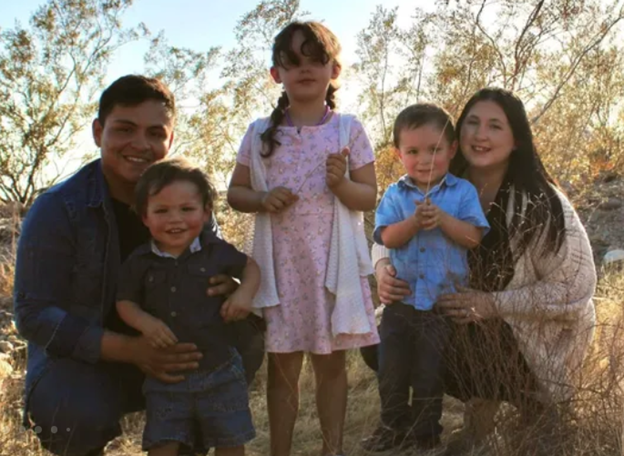
On a rural road in San Diego County on Sunday of Thanksgiving weekend, a military family’s life was permanently changed. Oscar and Jackie Cruz Acencio were traveling with their three children when their vehicle was struck head-on by a driver authorities say was a repeat DUI offender who was in the country illegally and had previously been ordered removed. Their 8-year-old daughter, Arya, was killed in the collision.
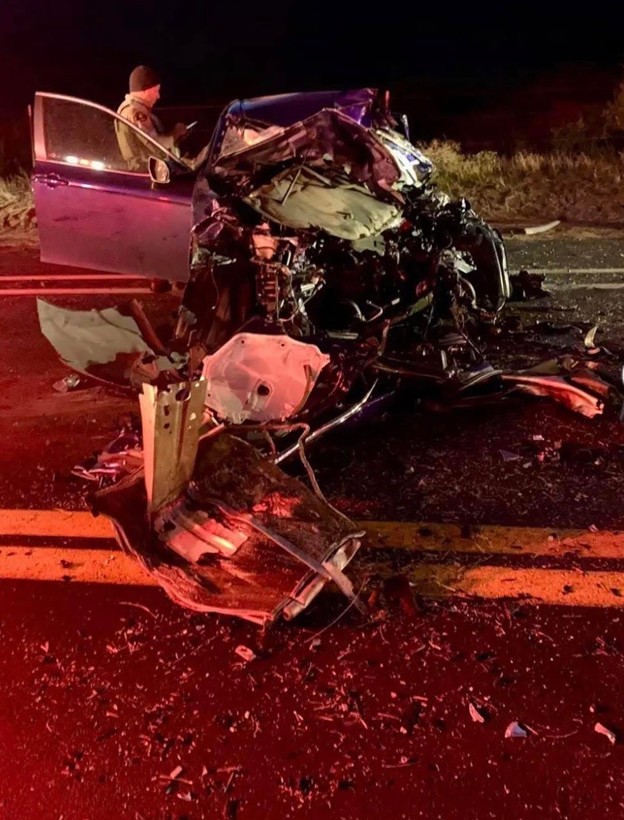
Oscar Cruz Asencio, a United States Marine sergeant stationed in Yuma, survived the crash but suffered catastrophic injuries. His wife, Jackie, told IW Features that Oscar suffered traumatic brain injuries, and his knee was so badly shattered that doctors were forced to amputate his leg above the knee. He remains hospitalized at Balboa Naval Hospital and is being medically evacuated to Palo Alto to receive state of the art care for his traumatic brain injuries.
According to the family’s verified GoFundMe account, the Cruz Acencio family was in the process of preparing for Oscar’s transition out of the military, with their belongings packed into the car, when the collision occurred.
Federal authorities have since released additional details about the crash. In a Dec. 5, 2025 statement, the U.S. Department of Homeland Security announced that Immigration and Customs Enforcement lodged an arrest detainer for Brayan Alva-Rodriguez, a Guatemalan national suspected of driving under the influence and causing the collision that killed Arya and injured Oscar. According to DHS, Alva-Rodriguez recklessly crossed a solid double yellow line into oncoming traffic, colliding head-on with the family’s vehicle. Five victims were transported to area hospitals by helicopter and three others by ambulance.
DHS stated that Alva-Rodriguez had a prior criminal history involving impaired driving. In 2020, he was arrested for driving under the influence. In 2021, he was arrested again for driving under the influence and charged with hit and run. ICE lodged an arrest detainer following the 2021 crash, seeking to take custody of Alva-Rodriguez after local proceedings.
Court records show that while Alva-Rodriguez was in immigration proceedings, he was charged in connection with a Sept. 6, 2020 crash. Those records indicate that Alva-Rodriguez pleaded guilty in April 2021 to misdemeanor drunken driving and admitted that his blood alcohol content in that incident was at least 0.15 percent. Prosecutors dropped other misdemeanor charges, including hit and run and driving without a license.
IW Features also reviewed publicly available social media material relevant to the case, including, a TikTok account using the name Brayan Alva-Rodriguez, which contained videos depicting beer cans inside a vehicle, as well as posts referencing police stops and admissions of not having a driver’s license, political commentary about President Donald Trump, and a brief 25 day period of ankle bracelet monitoring. IW Features makes no claim regarding the ownership or authenticity of the account beyond what was publicly viewable at the time of review. While social media content is not evidence of criminal conduct, the material underscores broader public safety concerns raised by cases involving repeat offenders who continue to have contact with California roads and communities despite prior arrests and legal proceedings.
IW Features spoke directly with Jackie Cruz Asencio, who described the moments after the crash in stark terms.
“After the accident, my bone was protruding out of my ankle,” she said. “I looked at my daughter Arya and I couldn’t believe she was dead.”
Jackie said the trauma of that moment is inseparable from her anger over what she believes were preventable policy failures, and she blames California Gov. Gavin Newsom directly.
“Sanctuary state policies protect two-time convicted DUI illegal immigrants instead of families,” she said. “I want justice for Arya. He never should have been here and this never should have happened. She would be alive if it wasn’t for sanctuary state policies.”
Jackie said she believes California’s sanctuary state laws, including restrictions on cooperation between local law enforcement and federal immigration authorities, played a role in allowing a repeat offender who had already been ordered removed to remain in the community. Supporters of sanctuary policies argue they protect immigrant communities and encourage cooperation with police. Critics counter that the laws can also limit information-sharing about individuals with serious criminal histories, even when public safety is at stake.
For the Cruz Asencio family, the debate is no longer abstract. As Oscar undergoes specialized medical care, Jackie says her focus remains on justice for Arya and on preventing another family from enduring the same loss. She hopes that by sharing their story, policymakers and the public alike will confront the consequences that sanctuary state policies have on public safety.
The headline and article summary have been been updated.