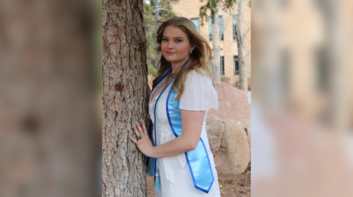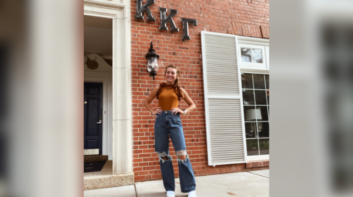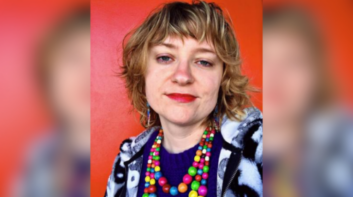



When Isabella Huệ Duyên first made the transition out of her small, private Catholic middle school into a much larger, public high school, she was excited. Growing up, she had been extremely creative, and her new school offered a wide assortment of art classes and all sorts of new people for her to make friends with.
However, she quickly found out the people she was befriending in her art classes were involved in a lifestyle she had never been exposed to at her Catholic school. Many identified as members of the LGBT community and began expressing romantic interest in her.
“At the time, nothing felt like a red flag because I thought that this was the way everyone in the world was behaving,” Huệ Duyên told IW Features. “I wanted to fit in, and so I assumed that this was what I had to do to keep my friends.”
Isabella was introduced to more members of the LGBT community through social media. She remembers her friends being “chronically online,” especially on platforms like Twitter, Instagram, and Snapchat.
“My friends were always posting about the rebellious things they were doing online. It was part of their identity. They would post about how much they were self harming or how suicidal they felt, and everyone would give them a ton of attention. I knew a girl that would post every day about how depressed she was and how much she wanted to kill herself. She made it seem very cool and aesthetic. Eventually, I started to mimic that.”
Throughout high school, Huệ Duyên watched as more of her friends came out as gay or bisexual. When one person came out as transgender, everyone acted like it was “totally normal.”
Social media exacerbated the problem. Her friends would post pictures of themselves at pride festivals or at LGBT events, and she felt like she was missing out by not participating in them.
“Eventually they tried to convince me that I was bisexual even though I didn’t really understand what that was,” Huệ Duyên told IW Features. “When I pretended to express confusion about my sexuality, they gave me more love and attention than usual, so I kept doing it.”
Her friends would force her to watch television shows and movies that were extremely sexually graphic even though it made her uncomfortable. They encouraged her to dress in more provocative and revealing ways, and were more accepting of her when she dressed in masculine attire. One of the girls in her friend group who identified as a lesbian would make perverted remarks towards her, comparing her to a hypersexualized anime character.
For several months, Huệ Duyên dated a girl who was several years older than her. She also dated someone who identified as transgender. She remembers that people of all genders would casually send her sexually explicit text messages.
The environment was degrading to her physical health. She began having horrible stomach aches and anxiety attacks. Her friend group also pretended like this was normal.
“Everyone was trying to market their trauma. When I was with them, I constantly felt like I was a victim and they convinced me that the only solution was to rebel more. I was so angry all of the time and it really hurt both me and my family,” Huệ Duyên recalled.
And all the while, social media was adding gasoline to the fire. Huệ Duyên said she remembers multiple times in which a leaked screenshot of a text conversation caused kids to feel suicidal. Bullying often took the form of ‘“cancelling” other students.
“I remember being so afraid all of time,” she said. “It really was like a cult.”
Huệ Duyên’s moment of reckoning came when she accidentally misgendered one of her friends during art class.
“Everyone in the group started calling me transphobic. My friends all switched on a dime and became viciously angry. It made me realize that this was a dangerous situation, and that these people were aggressive and violent,” she said.
Huệ Duyên claims that what saved her was her decision not to follow her friends to college, which in turn gave her the space to reconnect with her faith.
“The only way to recover from that radical ideology is to isolate yourself from it,” she explained.
–
Ideological capture online rarely begins with foreign propaganda. It often begins with a genuine grievance, personal vulnerability, or search for identity and belonging. Social-media algorithms then create a self-reinforcing system: emotionally charged content earns engagement, online communities reward ideological conformity, influencers intensify the grievance, and platforms profit as users are drawn deeper into these movements.
America’s adversaries exploit this architecture through bots, troll farms, synthetic personas, manipulated media, targeted propaganda, and generative AI—identifying existing fractures, manufacturing deceptive content at scale, and amplifying the most divisive voices in American society. Their objective is rarely to convince Americans to embrace a foreign regime. It is enough to deepen alienation, harden ideological divisions, erode trust in institutions, and turn Americans against their families, communities, country, and one another. This is The War on America’s Mind.