
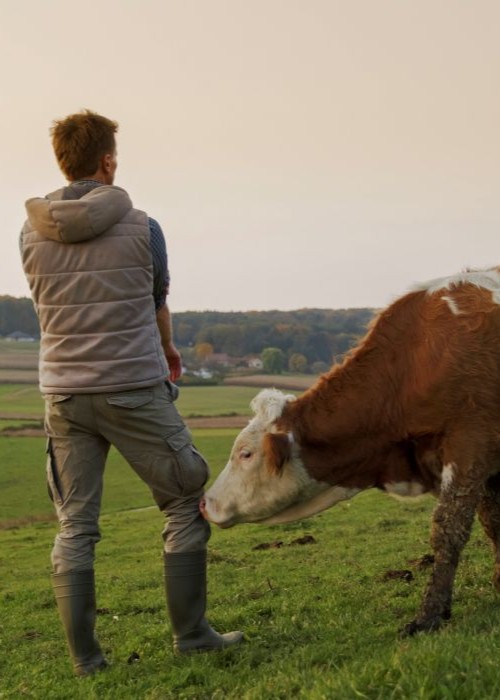

Carrie Balkcom grew up on a cow-calf ranching operation in rural Florida. Raising calves for sale, she said few people thought about whether their beef was grass-fed, but that was during a time when local American farms were still the bedrock of many communities.
Today, many of those farms have been lost to large, industrialized operations—or outcompeted by overseas production—and this change has had a ripple of consequences for American communities, consumers, and land.
“My great-great-grandfather came to the United States on a cattle boat from Spain,” Balkcom told IW Features. “My grandfather raised cattle… My great uncles were both dairymen, big dairymen.”
Balkcom has continued her family’s business and watched the world of farming change—and consumers’ preferences with it. Many people are now waking up to the importance of where their food comes from and how it’s raised, she said.
“The government… put out a ‘grass-fed’ label claim that said you could feed 20% grain, confine them…, give them antibiotics and hormones, and [still] say ‘grass-fed,’” Balkcom explained. “We went, ‘Wait, wait, wait, wait. That’s probably not what everybody thinks about when they’re thinking about grass-fed.’”
It’s why the American Grassfed Association (AGA) exists and why Balkcom serves as its executive director, working to clarify food labeling around animal diet and countries of origin as well as to support American farmers.
As she explained, the farming practices that have become conventional—like confinement and grain feeding—are in stark contrast to how American farming once operated and how it once helped preserve the land.
“Animals on pasture can restore,” Balkcom said. “You can’t keep a pasture-based production system and overgraze because you won’t be in business very long.”
Balkcom contrasted this with confinement feeding operations where animals are kept indoors and fed “a potato chip diet” that is trucked in, and where manure and other “outputs” are trucked out.
“It’s an efficient system, but it’s not a natural system,” Balkcom said. “They’re taking all that sludge and manure… and trucking that to places and putting it out on land.”
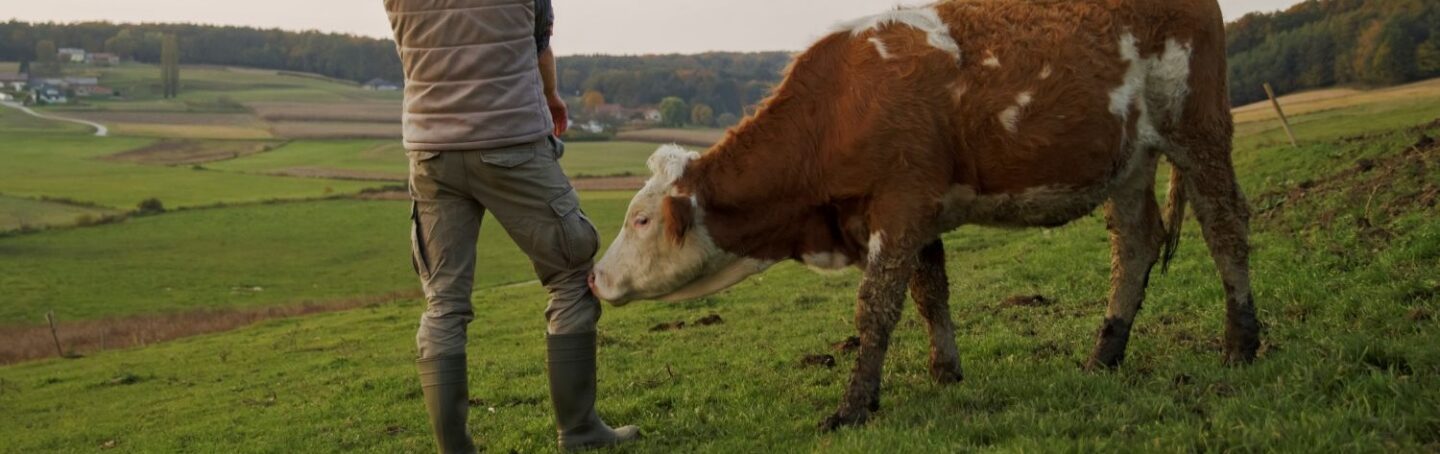
In a regenerative system, she said the animals are able to graze outside, fertilizing the land as they roam the pasture and regenerating the soil as they move.
But land isn’t the only thing that these farming operations preserve, Balkcom said. She explained how American farms are integral to rural communities, just like any other local business. The farms keep the land alive, provide food, offer business opportunities, let families stay in rural areas, and form an ecosystem of interconnected individuals.
“As a 4-H kid and a farm kid, and growing up as feral kids in rural South Florida, it was a great lifestyle,” Balkcom said, referencing the 4-H youth agricultural organization. “It was a great learning experience. It was a sense of community, and I’m just honored to be part of it.”
When rural farms die or are beaten out by foreign farms, the communities suffer. Balkcom cited AGA president Will Harris of White Oak Pastures as an example. She explained that when Harris started regenerative farming, his town was nearly empty and “the only thing you could buy in his town was a postage stamp.”
The same thing happened in her own small hometown, she said.
“All the big guys came in, extracted, and left everybody [without] the local grocer,” she said. “The fast foods, all the chains, and things… arguably, in our society, there is a place for those things, but in the rural economies, we’d like to see a local hardware store where people can meet and talk.”
“When I was a kid, if I was lucky enough to have a sick day off from school or miss the bus or whatever else, [I] got to go with my dad to town and sit around with all the farmers and cowboys,” she continued. “It was a… learning experience for me, and it’s built a sense of community.”
In this spirit, Balkcom said many AGA-certified operations are small, local operations and even Amish farms.
“Some of them are still hand milking,” she said. “Hopefully we’re keeping those folks in business and keeping them on their rural landscapes and keeping… their families and their history… alive.”
Meanwhile, overseas operations have no connection to the consumer or their community—and have little oversight of their farming practices.
“They co-mingle all these animals,” Balkcom explained. “You can get a hamburger that has thousands and thousands and thousands of animals in that one burger.”
And because of the lack of transparent labeling rules, products on store shelves do not always clearly list a product’s country of origin, leaving customers to make uninformed decisions at the checkout line.
“If it’s coming from your country, then claim it,” Balkcom said. “Let the consumer decide.”
This is Balkcom’s perspective on grass-fed labeling rules, too. She recommended that consumers check for third-party certified labeling to ensure honest marketing.
Even better, however, she recommended buying from a local farmer whom you trust, though she added that it’s important to ask informed questions to get a transparent answer and visit the farm to get a firsthand perspective.
“If you find a farm and you like those people… then buy from them,” she said, emphasizing that buying local keeps hard-working farmers, many of whom work multiple jobs or forego the benefits of a traditional job, in business.
“You see the signs that say, ‘Vote with your fork, vote with your dollar,’” she said. “Really look the farmer in the eye.”
And even in areas that do not have a 100% grass-fed farm, Balkcom noted that buying from a local farmer with healthier practices than typical agricultural systems is still a better option—for farmers, consumers, and communities.
“It’s a profession; it’s an advocation; it’s a lifestyle; it’s a historical document,” Balkcom said. “It’s preserving our history, the rural economies that started this country.”