


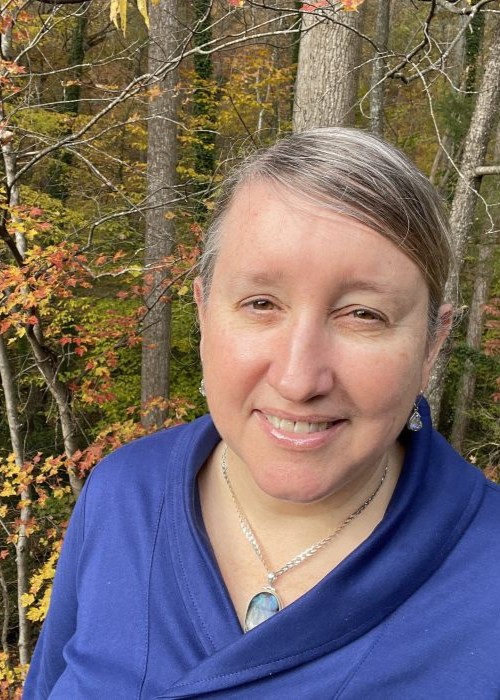

After years spent as a stay-at-home homeschooling mom, Suzannah Alexander decided to embark on her dream career fresh on the heels of a divorce. Alexander chose the field of professional counseling, telling IW Features she felt she was uniquely equipped to help others in this role, especially after seeing how well counseling helped her in the aftermath of her own divorce.
She began her studies at the University of Tennessee’s Counseling Master’s Program in August 2022. Little did she expect how hostile the institutions that train counselors had become.
“I think I was targeted fairly early on in my time there. Within the first couple of days, I noticed that there was friction between not only me and a few of the students, but also with the faculty,” Alexander told IW Features.
The first example of this conflict came about when the topic of how a counselor can control his or her emotions when a client is “pushing your buttons” came up during a class.
“I responded with the central practice of Buddhism, which is the doctrine of the non-self, or sometimes it’s called the meditation of the non-self. Basically, the idea is that you try to reduce your focus on your own identity so that you can interact with the person from the standpoint of your values, and you can better act out your values when you’re not thinking about yourself and your own egotistical needs,” Alexander said.
“When I brought that up, one of the other students in the class snapped at me, saying that it’s a privilege not to have to think about your identity. Immediately after class, my professor said, ‘You know that style of thinking could be seen as invalidating to other identities.’”
Alexander, a Buddhist herself, was shocked at the assertion that this religious practice could be construed as transphobic or racist, and assumed she must not have explained it accurately. Eager to clarify herself, Alexander talked with her advisor, only to encounter a long train of school administrators, professors, and students intent on silencing her for her opinions.
“Before I had a chance to really follow up with that, another professor who wasn’t even in the class approached me and said, ‘You know that thinking practice also was problematic.’ Then, within that same block of 48 hours, I talked to my advisor about it, who said that would have been fine a few years ago, but now that’s not fine. I was absolutely baffled.”
“I thought, ‘Wow, I’m just doing the worst job ever in trying to explain how this meditation works.’ So I just kind of doubled down, saying, ‘You must not be understanding me appropriately in how this works.’”
But Alexander was unable to convince her fellow students, professors, or school administrators that her Buddhist beliefs were not hateful. Her persistence eventually put her on a “support plan” just six weeks into the semester.
Originally, Alexander had asked for the support plan, hoping it would give her some “autonomy” after several instances in which she was berated for being “problematic” and “transphobic” by fellow students and professors.
But this “support plan” was anything but supportive, as Alexander was dragged through a myriad of struggle sessions where she said she was bullied for her Buddhist beliefs.
“I was pulled into my advisor’s office and told that someone had thought that I was transphobic, and one of my professors said that my thinking was ‘too concrete,’” she recalled.
Alexander said that, every other week, she was forced to sit for an hour with two other professors who pressured her to change her values.
“I try to speak, I get cut off. And if I say something to try and explain what I’m thinking, I’m told that I’m being defensive and I’m trying to protect my identity,” Alexander said of these meetings.
Under such pressure, Alexander was unable to commence her practicum, and was forced to walk away from the program and with it her dream of working in counseling in January 2023.
Alexander now works for the National Association of Scholars (NAS), a conservative nonprofit focused on reforming higher education through a system based on “individual merit in academic and scholarly endeavor.” The NAS hired her to help draft policy initiatives that target the accreditations for schools that harass students for their beliefs on transgenderism or for being white, she said.
Her experience at the University of Tennessee also inspired her to start a popular Substack, Diogenes in Exile, which discusses legal and policy changes that need to happen in the field of professional counseling. Specifically, Alexander hopes that her work may sound the alarm concerning the way accreditation standards “have this kind of ideological mandate built into them,” essentially forcing schools, professors, and students to think a certain way.
“It’s not okay for our universities or school systems to dictate morality to everyone based on nothing. I’ve looked up the background for these things. It’s not like they have data and research that prove that this is actually going to make the world a better place,” she said. “But if we sit and do nothing, then it will just consume our entire culture. And I’m not OK with that.”