

When a woman struggling to conceive visits a fertility specialist, she too often becomes part of a corporate calculation measuring how many patients can be converted into paying IVF customers.
“A lot of practices have something that they look at called conversion rates, and it basically shows how many patients you’re able to see and how many of those patients end up converting to doing IVF treatment,” Dr. Banafsheh Kashani, a double board-certified reproductive endocrinologist and obstetrician-gynecologist in Southern California, told IW Features.

The problem, she explained, is that IVF isn’t necessarily the best treatment for every patient––and that’s coming from a doctor who routinely performs it. Some women may benefit from less invasive, less expensive interventions, but financial incentives can discourage physicians from exploring alternatives, she explained.
“What you lose is investigation into different causes, rare causes, things that can be addressed in a different way than IVF,” she said.
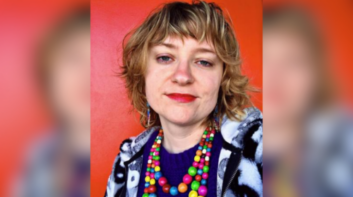
So Dr. Kashani decided to build something different. She always knew she wanted to practice medicine, so upon graduating cum laude from the University of California, Irvine, Dr. Kashani applied for medical school, earned her medical degree from the University of South Alabama, and then completed her OB-GYN residency at the University of Southern California and reproductive endocrinology fellowship at Rutgers. Her research spans endometrial function, fertility preservation, polycystic ovary syndrome, implantation and more.
Dr. Kashani said her interest in fertility medicine was set in stone while in residency at Los Angeles County Hospital. She witnessed homeless women––many of whom struggled with addiction––manage to deliver babies while other women desperately hoping to become mothers struggled with infertility. Seeing that stark contrast convinced her to dedicate her career to helping women build families.


After working at Kaiser Permanente and Eden Centers for Advanced Fertility, Dr. Kashani was able to open her own practice in Aliso Viejo in 2020.
“I always liked the clinic setting more than a hospital setting, and I did always have this dream. I could have this practice where I could set it up the way that I want and just have a really strong team,” she recalled.
Today, her practice offers everything from fertility assessments and ovulation induction to intrauterine insemination (IUI), IVF, and egg freezing. She explained that her approach always starts with a detailed assessment of each patient’s medical history, including their previous treatments, lifestyle, and their reproductive goals.
While Dr. Kashani doesn’t charge a traditional concierge membership fee, her model reflects the same patient-centered philosophy gaining traction among physicians seeking greater independence from insurance companies and large healthcare systems. In the same way that a direct primary care (DPC) or direct specialty care (DSC) practice typically charges a flat monthly fee, which in turn allows physicians to offer longer appointments and significantly more direct communication without administrative burdens associated with conventional insurance reimbursement, Dr. Kashani similarly prioritizes accessibility. And that even means completing paperwork after hours rather than cutting appointments short.
“I aim to put in the extra effort, even if it means after hours finishing my charts because I’d rather spend more face-to-face time with the patient in the office,” she explained.


It’s a fairly simple philosophy, but it’s one that physicians find increasingly difficult to sustain in a healthcare system where they regularly feel bound by administrative red tape, corporate management, and even financial pressures. Independent Women’s 2026 Reclaiming Affordability report identified structural barriers to competition as a major contributing factor to America’s healthcare costs, advocating for greater price transparency and benefits that give patients more ownership over where they receive care.
For Dr. Kashani, greater physician autonomy also translates into greater control over the treatment process itself. After years of relying on outside embryology laboratories for IVF procedures, Dr. Kashani began envisioning a center where she and other physicians could oversee every aspect of the process––from staffing to lab protocols.
So in 2024, she joined forces with a few fellow reproductive endocrinologists to launch South Coast Fertility Specialists, a physician-owned center in Orange County. The project required a multimillion-dollar investment, extensive planning, and more than a year of construction.
“It’s all been, again, physician-run and owned, and all the decisions come to us because we’re really aiming for quality over anything. We didn’t want to rush the process. We wanted to do everything right,” Dr. Kashani said.

Meanwhile, policymakers are exploring ways to make fertility care more accessible without relying exclusively on traditional insurance coverage. Independent Women supported a 2026 federal proposal that allows employers greater flexibility to offer standalone fertility benefits, arguing that expansion of consumer choice could help more families afford treatment.
The Trump administration’s TrumpRx initiative has also introduced discounted pricing for several commonly prescribed fertility medications. IW Features previously reported that these reductions could save eligible patients as much as $2,200 per IVF cycle.
Dr. Kashani said that the impact of this initiative has extended beyond pharmacies that participate in the TrumpRx program, as competing providers are in turn encouraged to lower their own cash prices.
“Some of the other fertility medications are not part of TrumpRx, but the pharmacies that supply those other meds, they have discounted their rates to match TrumpRx,” she explained.
For families facing enormous fertility expenses, those savings matter. IW Features previously profiled Oklahoma mother Kinsey Drawbaugh, who spent approximately $50,000 pursuing IVF after losing both fallopian tubes to ectopic pregnancies, and Olympic bobsledder Kaillie Humphries, whose own IVF journey cost nearly $70,000.
But Dr. Kashani’s perspective also demonstrates why improving fertility care requires more than simply making IVF affordable. She recalled treating a woman who conceived naturally but then lost the pregnancy around 20 weeks, subsequently suffering complications that severely damaged her uterine lining. Although her patient successfully created embryos through the IVF process, transferring them was a different story.
Other physicians suggested surrogacy. But Dr. Kashani continued to explore treatment options until that woman successfully conceived and carried her own baby to term. That was a particularly meaningful outcome for a physician who estimates she’s helped between 1,000 and 2,000 women get pregnant through her career.


Her message to women navigating infertility is to remain proactive, ask questions, and seek second opinions when necessary.
For Dr. Kashani, independence has allowed her to practice medicine in the way that originally inspired her career. And for her patients, that independence can mean something even more valuable––a physician who has time, authority, and passion to pursue the treatment that’s right for them.