
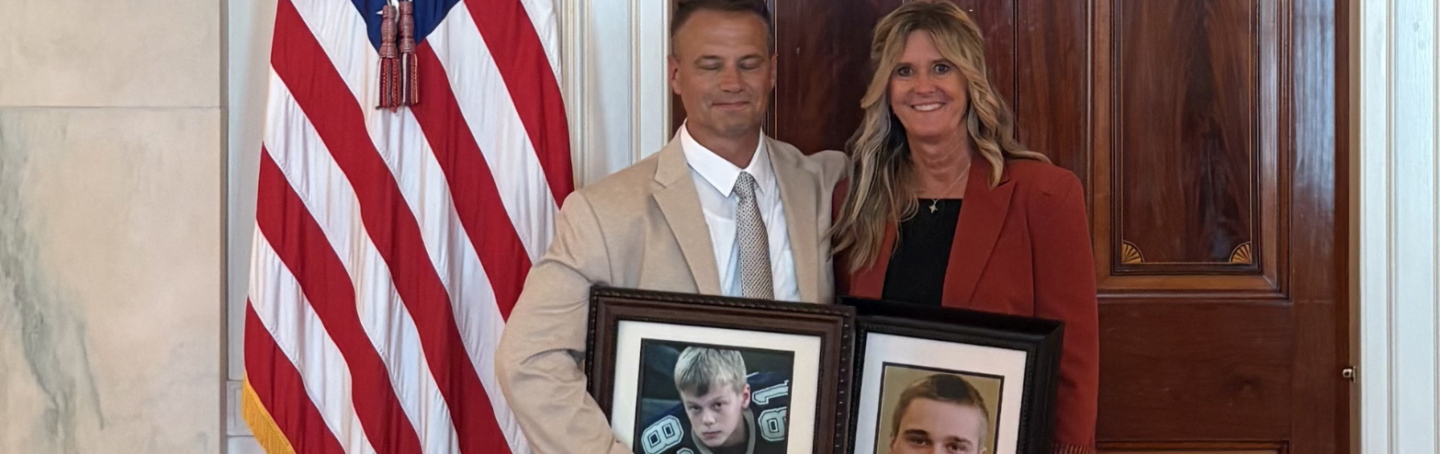

When Diana Estep’s teenage son Drew became addicted to drugs, she spent hours researching rehabilitation methods and sent him to therapy-focused centers around the country. Looking back, however, Estep told IW Features that after Drew’s experience, she firmly believes that the rehabilitation industry was incentivized to keep her son addicted. Now, she raises awareness about the widespread impact of drug use and the misguided policies that enable it.
“People who suffer are not bad people,” she said. “Drew always struggled as a child, and we could never get the help he needed, so he tried to self-medicate.”
Estep emphasized that Drew doesn’t fit the typical narrative that society tells itself about drug addiction. He came from a loving two-parent home, and both of his sisters are married and earned master’s degrees, she said. Rather, a devastating childhood experience, combined with Drew’s need to seek approval from peers, is what put him at risk, Estep said.
“When Drew was 14, some of the popular kids in his class were smoking marijuana and gave him some attention,” she said. “He always longed to fit in and would do anything to fit in.”
According to Estep, Drew was always “brutally honest” and never lied to her about what he was doing. “He told me, ‘I’m going to keep doing drugs because it makes me feel better,’” she said.
Estep said that when Drew was 18, he told her about an extremely traumatic incident that occurred when he was around seven years old. That experience, she believes, was what pushed him to self-medicate and escape his own thoughts. By the time she found out, however, it was too late – previous attempts at therapy had failed, and he was addicted to pain medication.
“By the time Drew graduated from high school, he was pretty addicted to taking anything he could get to numb himself, and he would tell you that ‘I can’t be alone inside my own head,’” she remembered.
For the next six years, Estep helped Drew enroll in various rehabilitation centers that purported to have a focus on therapy. Despite her best efforts to find a good program, however, Estep and Drew both became completely disillusioned with the entire industry.
“The longer Drew was in rehab, the worse he got, because mentally he got burned out on life,” she said. “He stopped believing that anybody cared or that he mattered, and that it was just a game that they were playing with him for the insurance money.”
While attending a rehab center in Florida, Drew told Estep that “human hustlers” would comb the area for relapsed patients and bring them into the center, where they would be paid a large sum. The rehab centers themselves also made much more money via insurance when their patients relapsed, she said.
“Over the six years that he lived in treatment, I believe that our insurance was billed something like two and a half million dollars,” she said. “And insurance didn’t cover all of it.”
The rehabilitation center’s policies may have been partially responsible for Drew’s tragic death in 2020, Estep said.
“His last text read, ‘I can’t live like this anymore,’” she said. “It’s so common for people to use drugs one last time, especially if they’ve been clean for a few days. It’s my understanding that for insurance reasons, you won’t be admitted to a detox program without drugs in your system.”

When Drew used drugs for the last time, he had no idea he had been given fentanyl, she said. At the time, he was living in Indiana, and Estep was not in frequent contact with him.
“I just had a gut feeling that something was wrong,” she said. “He had passed away four days before.”
After Drew’s death, friends posted tributes to him on Facebook. One woman in particular, Estep said, seemed to know more details about what had happened to him. So Estep reached out to her.
“She told me that she knew where Drew had gotten the drugs that killed him,” she said. “The dealer’s dad was the chief of police where he’s from, so they sent him to a rehab program. But once he got there, nobody really followed up and checked on him. So after the 30-day program, he got out and stayed in the area.”
Thanks to this information, Drew’s dealer was caught and imprisoned. But the flow of fentanyl into the country is still a massive problem, Estep said.
“There are no fentanyl labs in the United States – all of this is coming through the border,” she said. “All it takes is fentanyl the size of a grain of sand or salt, and it’s in marijuana, it’s in everything.”
The devastation wrought by irresponsible open-border policies impacts not only those caught in addiction, like Drew, but also their grieving families who are left behind.
“For six years, we lived a life of torture, and then on top of that we grieve after the torture,” Estep said. “It’s so unjust that we went through all of that and still ended up losing him.”