



At 13-years-old, Jonni Skinner was made to believe he had somehow been born in the wrong body. Adults in white coats told him he had a medical condition that required medical intervention. He was diagnosed as transgender after just one appointment, referred to specialists, prescribed hormone blockers and estrogen, and assured that transition was the only path he could walk for a livable future.
Today, Skinner believes something very different.
“I was probably, most likely just a gay guy that they did this to,” Skinner told IW Features.
Now 22-years-old, Skinner has become one of America’s most outspoken detransitioners. He argues that what he needed as a lonely, autistic, feminine teenage boy wasn’t a new identity. Rather, he needed the freedom to grow into himself without irreversible medical intervention that still affects him to this day.
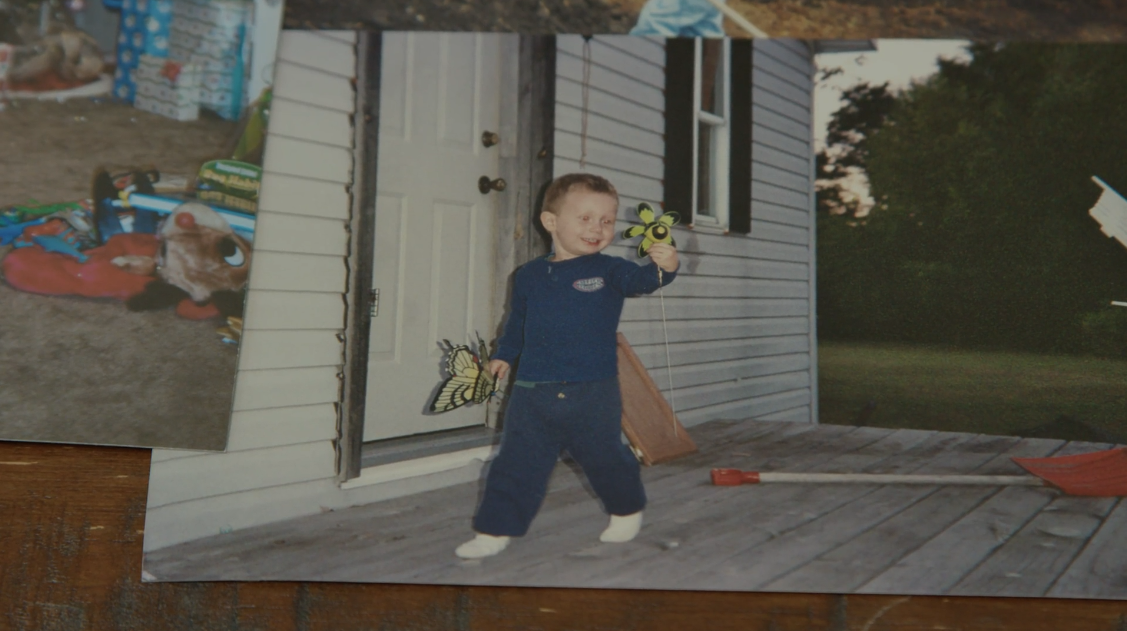
Skinner’s story began in a Michigan town of roughly 2,500 people, where he said he always felt different. Diagnosed with autism as a toddler, Skinner also gravitated toward more feminine interests, such as Disney princesses, musicals, makeup, and fashion. These interests, he said, made him a target of bullying from a young age.
“I was an effeminate little boy,” he admitted. “People in my very small area were not particularly open to that.”

The bullying and isolation left him searching for somewhere else he belonged. Around the age of 12, while watching beauty gurus on YouTube, Skinner discovered transgender-identifying personalities whose transition stories from male to female seemed to offer an explanation for why he, too, felt out of place.
“They just talked about it like it improved their lives,” Skinner said.
To him, transition “presented a way out” of being a young, gay male. At the time, Skinner was also attending a Lutheran private school where, he said, being a feminine boy attracted to other boys made him feel incompatible with the world around him.
“I thought, if I do this [transition], then I don’t have to suppress my personality,” he recalled thinking. “I can dress how I want. I can date the people I’m actually attracted to.”
In February 2016, shortly after turning 13-years-old, Skinner told his mom he thought he might be transgender. He expected to have to undergo months of psychological evaluation, but instead he received a diagnosis after a single appointment at a pediatric gender clinic in May 2016. This decision set the course for the next decade of his life.
“I was supposed to have months and months and months of therapy,” he said. “But it was only that single appointment.”
According to Skinner, the clinician framed many of his struggles––especially his fear of growing into a man and his anxiety surrounding homosexuality––as evidence that he was what she described as an “early-onset” transgender child.
“She sort of took my insecurities and my fears and framed it around this idea that I’m this true trans kid and that I needed medical intervention as soon as possible,” he said.
His mother was then presented with a familiar phrase that has now surfaced time after time in lawsuits and detransitioner accounts: “Would you rather have a living daughter or a dead son?” the clinician asked.
“The message that I received was if I didn’t do this… I might as well commit suicide,” Skinner recalled.
Within months, Skinner was sent to a pediatric endocrinologist at his state’s top children’s hospital. There, he said, transition was presented to him as the only medically appropriate path forward.
The endocrinologist Skinner began seeing explained his condition as if he were neurologically intersex. Skinner recalled the endocrinologist showing him a whiteboard with illustrations of a brain on the wrong body, explaining his scientifically unproven theory that most embryos in the womb start female, but a wash of testosterone masculinizes the fetus. But, Skinner recalled being told, if the wash is delayed, then a developing brain can continue developing as female before the delayed wash masculinizes the body.
“This was just his theory, but he had explained it very matter-of-fact,” he said. “So there was essentially no way in his mind I would grow up gay. I was a different kind of person.”
Skinner’s mom, however, repeatedly asked whether permanent medical interventions could wait until adulthood. Instead, Skinner alleges the endocrinologist warned his mom that if she was not supportive and affirming, the hospital could help find Skinner another home.
“That frightened me,” Skinner recalled. “My mom was the only person that was there for me.”
So, Skinner then began a medicalization journey—one that he said permanently froze him as a child.
First, he was put on spironolactone––a testosterone blocker––in 2016.
“Around this time, the endocrinologist… I don’t remember how we got our numbers exchanged, but he had started calling me on my private phone to kind of talk me down when I would have panic attacks like, ‘Oh my God, I’m going to masculinize because I have peach fuzz on my body,’” he recalled. The endocrinologist would reassure him that life would get “so much better,” Skinner said, once he began estrogen.


After only a few weeks of taking spironolactone, Skinner was placed on estrogen. Soon after the medications took effect, Skinner recalled experiencing dizziness, fainting spells, worsening urinary problems, breast development, and other side effects.
“When I’d felt the drugs start releasing into my body, it was almost like this outpouring of like coldness into my body, and it made me feel very sick at first, and like I was having really bad hot flashes, and like I would break out in a cold sweat,” he said.
At 14-years-old, he received a puberty blocker implant in his arm, and over time, Skinner said his medical complications multiplied. He developed flank pain, muscle spasms, and fluid leaking from his chest. When his puberty-age body would understandably attempt to have an erection, he described the feeling as “sharp, sharp pain,” as if he were peeing glass.
During high school, he said the complications became impossible to hide.
“I started having full-on urinary incontinence by this time, so I wasn’t like dribbling.
I was having like full-blown accidents. And since then, that’s been fairly consistent,” Skinner said.
By March 2017, Skinner alleges his endocrinologist told him they needed to stunt his growth. After scanning his hand in the radiology department, the specialists had projected that he would end up between 6’1” and 6’4” if his body continued to develop naturally. Skinner said the endocrinologist spoke with him privately about his height, warning Skinner that women don’t get that tall and therefore he wouldn’t be a passable trans woman.
“And if I’m not passable, then it would make it harder for me to find a husband, which I know sounds insane, but I was 14, so that was a huge concern of mine at the time, like, ‘Will I ever be loved?’” Skinner recalled.
After that appointment, Skinner’s estrogen prescription was upped to six milligrams to fuse his growth plates. He has not grown taller since.
Eventually, Skinner said he began urinating blood. After seeking care outside the original hospital, Skinner said another medical team identified severe bladder inflammation and ulcers. After receiving this news, Skinner’s mom “threw a fit” for his puberty blocker implant to be taken out, and within a few weeks of its removal, he said his bladder cleared up completely.
Beyond the physical effects, Skinner alleged the relationship he developed with his pediatric endocrinologist crossed professional boundaries. He said the doctor regularly communicated with him through private phone calls, texts, and emails without his mother’s knowledge. After Skinner realized his penis was failing to become erect, for example, he said the endocrinologist taught him about orgasms and sexual pleasure.
“He did have a whole conversation with me on how ‘There’s other ways to have sexual pleasure, and has anyone ever talked to you about, like, your prostate and anal vibrators and things of that nature?’” Skinner recalled. “I don’t think it’s normal for a doctor to be having that conversation with a teenager.”
But at the time, Skinner said he wasn’t necessarily unsettled by these conversations because, to him, this was his doctor, and he was told that he could talk to him about anything.
Skinner also alleged that the endocrinologist made recommendations for facial feminization procedures, the use of Snapchat filters to visualize future surgeries, and even a referral to a cross-dressing store, Janet’s Closet, while he was still a minor.
“They didn’t describe it as a sex store,” he recalled. “They said it’s a store that supports trans people. And they wanted me to go there to get materials that they said would help me pass better before the hormones did their work.”
But when Skinner and his mom arrived, they were shocked by the breast prosthetics that looked like “silicone cyberskin” and the full-body skin suit meant to look like a naked woman. According to Skinner, the store’s owner explained the skin suit as being for transgender women who have “bottom dysphoria” but haven’t had a vaginoplasty, vulvoplasty, and/or orchiectomy to remove male genitalia.
“My mom looked very alarmed during this time,” Skinner lamented. “I just remember her eyes looked very tearful during this period.”
For years, Skinner continued to suffer under the belief that he had an immutable neurological condition. That belief, he said, didn’t begin to unravel until late 2023, when a new endocrinologist suggested he temporarily stop hormones due to the severity of side effects he had been experiencing.
By this time, Skinner said he had already missed out on most of the normal adolescent milestones. He felt very isolated and admitted that much of his company was older men online, because it was the only place he was “really getting positive feedback or attention.”
“I mean, my whole development was just completely arrested, and I was just sick and emotional all the time,” Skinner recalled.
Weighing no more than 120 pounds with a musculoskeletal frame that had been stunted by high doses of estrogen, Skinner recalled appointments with his new endocrinologist colored by sobbing episodes about his body and his psyche. Around the same time she instructed him to take a break from the hormonal interventions, Skinner also came across the WPATH files, a bombshell report of leaked files suggesting transgender medicine was nothing more than pseudoscience.
This sent Skinner down a rabbit hole of research, where he discovered that his original endocrinologist’s brain-in-the-wrong-body theory was just a fringe theory. Skinner said he came to a painful conclusion: “I was probably most likely just a gay guy that they did this to, and I just never had the chance to grow up to figure that out.”
According to Skinner, this realization made his whole world come crashing down. After all, his whole adolescence had been shaped and molded by medical professionals who assured him he could transcend biological reality.
“I literally felt like the sky was falling in, and I went into this horrific depression,” he recalled.
Obtaining his medical records in early 2025 deepened the conviction that he had been severely wronged. Skinner alleged the records falsely claimed he had identified as a girl since age two, attempted self-harm because of his “gender identity,” and exhibited behaviors he says never occurred, like attempting to remove his own genitalia at age seven.
“None of this was true,” Skinner stated. “They made it sound like it was entirely led by me, and I wanted all of this, and I was bringing all of this up, and I wasn’t. It was all their recommendations.”
Today, Skinner says detransition has brought him both emotional healing and ongoing medical uncertainty. Even though he is no longer on estrogen or blockers, he continues to experience health problems he believes stem from years of wrong-sex intervention. Doctors continue investigating unexplained bone growths that Skinner speculated may be due to the stunting of his growth in adolescence.
Yet rather than retreating from public life, Skinner has become one of the growing number of galvanized detransitioners speaking publicly about the ills of pediatric gender medicine. He believes his experience proves the need for stronger safeguards before minors receive irreversible medical interventions.
“I spend a lot of my time advocating for stronger medical safeguards because I really just don’t want this to happen to another kid,” Skinner said.
Looking back, Skinner believes what he needed at 13-years-old was not hormones or feminizing surgeries, but reassurance that there was nothing wrong with being an effeminate boy attracted to other boys.
“I just needed more support to build some self-worth,” he said. “I needed people to protect me from this medicalization so I could have the life experience to figure out who I was.”


Despite now proudly identifying as a gay male, Skinner still feels “locked out of the gay community” because of his decision to publicly detransition, as well as his stunted physique.
Gender medicine put him through “an abysmal experience to live through at such a young age,” Skinner said. And it has affected many other people “in all areas of life, from all walks of life, and in such permanent, pervasive ways.”
According to Skinner, who feels particularly disillusioned by the medical industry, the chain of trust between doctors, patients, and parents has been broken. But ultimately he said he’s unsure if the medical community is equipped––morally or financially––to take responsibility for the harm it has caused.
“At 13, we’re all insecure,” Skinner recalled. “So the fact that they weaponized that insecurity to essentially exacerbate my body image issues and then selling me, of course, hormones and surgery as a fix-all for that… It’s really horrible.”
But as Skinner advocates for change and the truth spreads across the nation, his message is not one of despair for the years he and many others have lost to an ideological contagion—it is one of hope for healing and self-acceptance.
“This world is so big and so diverse,” Skinner said. “There is always going to be a place that will love you and accept you as you are without having to change your body.”

Editor’s Note: An earlier version of this video included incorrect dates. The video has been updated to reflect the correct timeline.