


Kristy Borrego Ojinaga has spent her entire life in Santa Fe, New Mexico. It’s where she was raised, where her family is rooted, and where she chose to raise her own children. For generations, she said, it has been the kind of place where families could trust the institutions around them—until now.
The state has slowly changed, Ojinaga said, and like most parents, she first saw the effects at the edges. Shifts in language, in policy, in what schools emphasized––these changes felt distant, abstract, and not urgent, she recalled.
“I assumed someone else would address it before my children were old enough to experience the consequences,” Ojinaga told IW Features.
Then her six-year-old daughter came home from school one day in mid-September last year and couldn’t explain why she was upset.
At first, it didn’t sound like anything concrete—more like a young child struggling to articulate something she didn’t fully understand herself. Ojinaga describes her daughter as talkative, the kind of kid who normally shares every detail of her day without being prompted. But that night, she couldn’t.

What slowly emerged through careful questions and reassurance wasn’t a single concerning incident but a pattern her daughter had been trying to rationalize on her own. Ojinaga learned there was a boy in her daughter’s class––one whom her teachers referred to as a girl, encouraging students to do the same. Once Ojinaga’s daughter got this off her chest, the situation became much more complex and concerning. Her daughter described the boy following her into the girls’ bathroom and engaging in behavior that made her uncomfortable, including repeatedly touching his private parts in class.
The next day, Ojinaga and her husband went to the school to raise these concerns with their daughter’s teacher. The teacher didn’t answer their questions directly, she alleges, and the principal joined the meeting almost immediately.
At that point, Ojinaga said, it became clear this wasn’t a misunderstanding—it was a policy choice.
The school confirmed the child was a male identifying as a girl who had a “gender support plan” in place. Under district policy, that meant access to the same bathrooms and private spaces as female students. Ojinaga then asked the obvious question: why weren’t parents told?
“They said that Family Educational Right and Privacy Act (FERPA) law protects children’s privacy and that we are only entitled to information about our own child, not about any other child,” she said.
However, through additional meetings with administrators, Ojinaga learned that parents of transgender-identifying children themselves might not know about their children’s varying identities. Gender support plans can be implemented for students at any age––including 6-year-olds like her daughter’s classmate––and facilitated by district wellness coordinators, according to school policy. Ojinaga learned that these staff members are not required to be licensed medical or mental health professionals, and that the plans allow students to socially transition within the school environment. This includes accessing bathrooms and private spaces aligned with their “gender identity,” and concealing this information from gender-confused students’ parents in certain cases.
Ojinaga raised concerns about all of this, but administrators “essentially had told me it was none of my business,” she said.
They even dismissed her concerns about the student’s behavioral history. The same child had allegedly previously exposed himself in class during the prior school year––just three months earlier. And once again, this information had not been disclosed to parents. Ojinaga said she continued to push back—not just for her daughter, but for “all the little girls whose parents don’t even know that this is happening.”

She eventually met with the wellness coordinator responsible for implementing “gender support plans,” and with multiple levels of school administration. But those meetings, she says, shared a consistent theme: the school’s policy would not change, and her young daughter would need to adapt.
“The coordinator said that the little boy using a bathroom that identified with his biological sex was more harmful to him than my daughter sharing a bathroom with a biological boy,” Ojinaga recalled.
In another meeting with the district’s superintendent, assistant superintendent and chief of staff, Ojinaga vented her concerns. The administrators “made a lot of promises,” she said, and asked her what they could do to find a middle ground.
Ojinaga told them, “‘You need to tell parents that this is happening.’ Because, for my particular instance, my daughter, being 6-years-old, doesn’t have the capacity to consent to being put in that position or really to remove herself. That is my job as her parent to put these boundaries around her.”
At one point, she was told she could file a Title IX complaint if she believed the trans-identified student’s behavior warranted one, but when she tried, she said the district declined to move forward with it.
Concerned with the school’s refusal to work with parents like herself, Ojinaga also reached out to the school to find out what was being taught to students about “gender identity.” The school’s curriculum, she said, is called “Puberty: The Wonder Years,” and administrators allegedly tried to dissuade her from accessing it first by insisting her kids aren’t old enough to see it yet. When that didn’t work, they tried to cite copyright issues as the reason they couldn’t let her see it.
Eventually, in a meeting with the principal, school counselor, school nurse, and lead nurse for the Santa Fe Public School district, Ojinaga was allowed to review the curriculum. In addition to instructional materials framing gender as fluid, one note on the PowerPoint slide stood out in particular to Ojinaga.
“It pretty much says that no matter what stereotypes your family or your parents might have about your gender, that the school will always support you, essentially, and that they should ignore their parents,” she recalled.
Ojinaga called them out, telling them, “You’re undermining parents here.”
What the lead nurse told her in response was revealing.
“The lead nurse told me that maybe the public school wasn’t for me or my children,” she said. “The other nurse said that my children would be disrespectful if they didn’t address children by their preferred ‘gender identity.’”
So, just three months into the school year, Ojinaga decided she had had enough and made the decision to withdraw her children from the district.

The tradeoffs were immediate and difficult, she explained. Both she and her husband worked full-time, and homeschooling required a rapid restructuring of their daily lives. But for Ojinaga, the alternative was leaving her children in a situation she no longer believed the school was willing to address.
“I feel like our parental rights were taken away by the Santa Fe Public School District,” she said.
Additionally, the effects the trans-identified student’s behavior had on her daughter didn’t fade away overnight. For a while, her daughter was visibly uncomfortable around bathrooms, Ojinaga said, asking her, “Will you be in there with me, Mom? Who’s going to be in there with me?”
Although this battle began as a private concern, Ojinaga said it has since transformed into a public obligation, because other families in the state may not even realize what divisive ideologies their children are navigating. And if they do find out, Ojinaga said many New Mexicans fear speaking out if it could jeopardize their kids’ safety or cause retaliation from the school, other children, or parents.
“We also feared for our jobs because that’s what sustains our family. That’s what feeds our kids,” she explained. “Everything we did was to try to protect our daughter, but also protect all kids. We just wanted equal protections for all of them, but we knew that we were going to probably be called names and that it could potentially jeopardize our jobs at some point.”
Many New Mexican parents are also forced to “just deal with it,” she said, because homeschooling and private school options are expensive.
Ojinaga’s focus now is on transparency and parental authority––specifically the idea that parents should be informed about situations that affect their children––and she hopes her advocacy can foster an environment in New Mexico where parents aren’t afraid to stand up for their children’s rights.
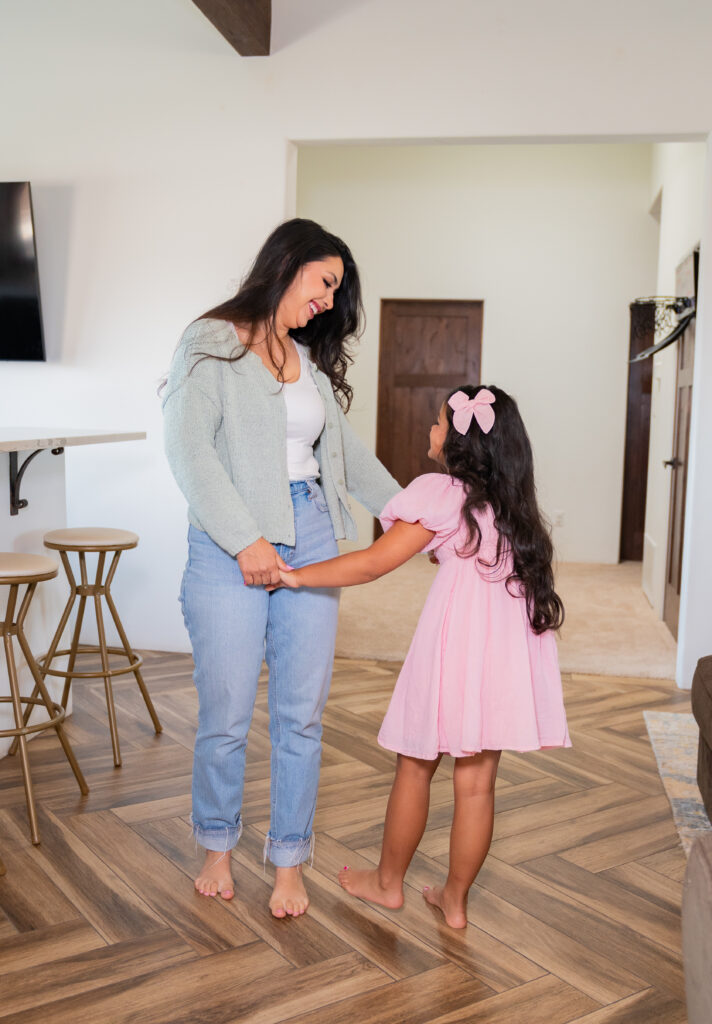
In March 2026, Liberty Counsel filed an administrative complaint on behalf of Ojinaga and other concerned parents against Santa Fe Public Schools.
Liberty Counsel Founder and Chairman Mat Staver said, “The deliberate indifference by Santa Fe Public Schools toward sexual misconduct and the safety and wellbeing of female students violates Title IX and ignores morality and biological reality. A federal investigation is the next step toward correcting these unlawful actions to protect students. Parents should not have to withdraw a child from school over gender policies that violate federal law, endanger children, and usurp parental rights. SFPS should eliminate these policies immediately to protect children.”
For parents like Ojinaga, this complaint could go a long way in nudging the U.S. Department of Education’s Office of Civil Rights (OCR) to open an investigation into Santa Fe Public Schools’ “gender identity” policies.
“Especially these little girls, their privacy matters, their ability to feel comfortable in their own spaces, it matters,” Ojinaga said. “And we shouldn’t be sending them the message that men could and boys and males can infiltrate their spaces and that by them feeling uncomfortable is somehow a reflection of them not being accepting or them not being loving because that is wrong.”
From Ojinaga’s perspective, it can be difficult to go against the grain in small communities like Santa Fe, or even in small states like New Mexico because everyone knows each other. Understandably, many fear that speaking out could impact their extended families, she added. But when it comes to protecting her own kids, Ojinaga said, “Call me all the names you want.”

“If I’m doing right by them, I’m fighting for a better future for our daughter, maybe even a safer one for our son, our sons, then you could call me all the names you want,” she said. “I know my heart is not to hurt any child, but I want my rights as their parents to make their decisions on their behalf. And I think every parent should want that fundamental right—not just sit by and let people like the Santa Fe Public School District or the state of New Mexico take it away from them.”