
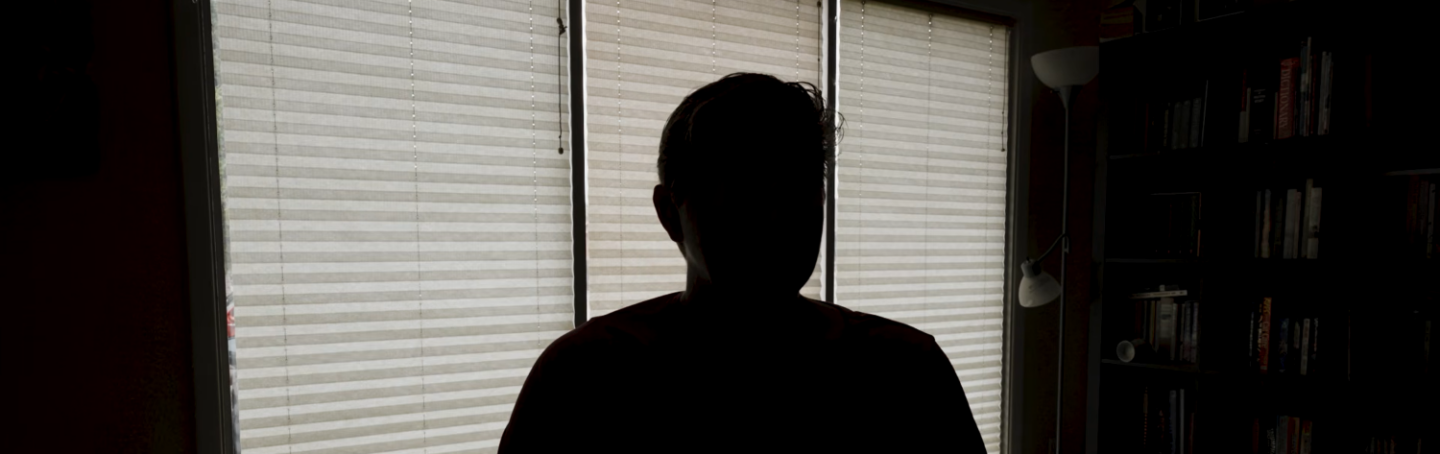

In the northwest corner of New Mexico near a Native American reservation, a veteran educator, Paula Edwards*, has spent over two decades watching her state’s education system unravel from the inside. She has worked in classrooms and libraries, and in her current role as an instructional coach, she considers reading instruction to be her life’s work. But it appears the odds are stacked against her.
“If we don’t have a literate society, we really don’t have a free society,” Edwards said in an exclusive interview with IW Features. “We’ve known that for 200 years as Americans. And of course, living in New Mexico—being the very, very bottom of the barrel in education—we don’t have a literate society in our state.”
Edwards grew up inside the same system she now critiques. The daughter of ministers who served on a reservation, she began teaching in children’s ministry as a teenager and never left the world of working with kids. She asserted that it’s her “calling.”
But from an early age, Edwards said she noticed the consequences of New Mexico’s educational failures. When a cousin moved from New Mexico to Texas in elementary school, for example, Edwards recalled how poorly prepared her cousin was to enter a state education system that expected more from its students. That cousin allegedly struggled to pass a Texas high school equivalency exam, forcing the family to spend thousands of dollars on tutoring.
“Growing up in New Mexico, we were always at the bottom,” Edwards admitted. “And we’ve got to look realistically as to why that’s happening.”
One of Edwards’ most urgent concerns is student attendance––or the lack of meaningful enforcement in general.
Under New Mexico law (NMSA 1978, § 22-12-2), school attendance is technically compulsory. But, enforcement doesn’t begin until a student racks up ten unexcused absences in a school year. Once a student hits the threshold for being labeled “habitually truant” under § 22-12-7, schools are supposed to pursue intervention measures. On the tenth day, schools are allegedly only required to unenroll the child and report the case to the state’s Children, Youth, and Families Department (CYFD), a system Edwards described bluntly as “a hot mess.”
During the COVID-19 pandemic, Edwards said New Mexico’s truancy crisis spiraled out of control, with schools losing track of more than 100,000 children. New Mexico now has the highest percentage of chronic absence rates among all states.
“We don’t even know where those kids are,” she said. “Can we teach a child who’s not at school? And even now, six years later…where are those kids?”
The consequences of minimal attendance enforcement show up in the classroom. Edwards reflected on a student who attended only 64 days out of 177 school days. Despite the student allegedly failing to meet basic standards and scoring poorly on exams as a result of the continued absences, Edwards said she was required to pass the student to the next grade.
“All my grade book has zeros,” she recalled. “But they told me, ‘No, you have to pass her.’ How can you educate a kid who’s not there when there’s no consequences?”
Discipline has deteriorated alongside attendance, Edwards noted, describing classrooms where children quickly learn that extreme behavior brings rewards––not reprimands.
“I walked down the hallway the other day, and I had a first grader throwing a bookshelf across the room,” Edwards revealed. “And he already knew that if he screamed loud enough and said ‘No’ hard enough, nothing would be done.”
Students who throw their desks or disrupt class are often removed and rewarded with treats or early dismissal from school, Edwards said, while their classmates are forced to adapt by tiptoeing around their volatile peers.
“The kids who want to be there are basically being groomed for emotional abuse,” Edwards said.
One incident ultimately pushed Edwards out of the classroom and into her coaching role. A second-grader, not yet potty-trained, allegedly would smear his feces on classmates when angry in order to escape sitting through lessons, Edwards said.
New Mexico’s policies have enabled this kind of behavior by preventing educators from handing down consequences and leaving them “stuck with bribery” as the only recourse, Edwards said. The Positive Behavioral Interventions and Supports (PBIS) system, which was introduced at the federal level in 1997 then formally incorporated by New Mexico in the 2010s, emphasizes rewards over discipline, meaning teachers and administrators are instructed to ignore negative behavior and instead acknowledge positive behavior.
To make matters worse, Edwards stated that the schools she has taught at increasingly turn to medication in order to course correct behavioral issues.
“In America, we medicate bad behavior rather than giving consequences,” Edwards said.
Edwards also pointed to what she sees as systemic failures in teacher preparation and oversight. Licensure requirements in New Mexico, she explained, have been weakened to the point that teacher certification exams were removed and replaced with simple portfolio submissions.
“And once you’re in, it’s almost impossible to get you out… even if you’re a really bad teacher,” Edwards said.
Edwards is particularly critical of the Bureau of Indian Education (BIE), which operates the schools serving Native American communities––many of which Edwards has taught at. According to her, BIE schools do not publicly report their academic performance and often fail to follow evidence-based reading instruction.
As a result, “a lot of those kids come out not being able to read very well,” she said.
She recounted that her Native American family members brought home welfare applications as part of school assignments, and expressed concerns that the BIE was creating a culture of dependency on government, rather than equipping young people with the right tools to set themselves up for success.
“‘Be dependent for the rest of your life,’ that’s what they’re teaching,” Edwards alleged.
New Mexico’s status as a transgender sanctuary state has also introduced new complications for educators like Edwards, who are hyper-focused on relieving massive educational achievement gaps. She told IW Features that district policies require teachers to socially transition students––even as young as five years old––without informing parents.
“If Billy came in and decided he wanted to be Bonnie, I would be required to socially transition that child without informing the parent,” she said.
According to Edwards, her local school board enacted these policies with minimal public input after having held meetings during weekday work hours and limiting parental participation. For teachers with religious or otherwise conscientious objections, Edwards expressed how this environment can feel hostile.
“I’ve had to be a closet conservative in the classroom my entire career,” she admitted. “And it’s just plain not fair.”
At the same time, Edwards described repeated frustrations with child welfare reporting. Despite having made numerous calls to the state’s Children, Youth, and Families Department (CYFD) about suspected abuse––including one student whom she said regularly arrived bruised––she said that little action was taken. Every year, teachers would participate in trainings about how to work with CYFD, but “every year we know nothing’s going to get done,” she added.
Despite her frustrations, Edwards has not given up on New Mexico’s students. She believes the state can still reverse course if it makes very focused reforms: enforcing attendance standards, reinstating rigorous teacher certification exams, and adopting evidence-based reading and math instruction.
“Get your indoctrination out of the classroom and get us back to the basics,” Edwards urged. “School is for getting our kids to read and write and do math.”
Ultimately, Edwards told IW Features she has found encouragement amidst the emerging networks of educators nationwide who advocate for professional and ideological freedom. For the first time in her career, she said, teachers around the United States, like her, are beginning to feel less isolated in their classrooms.
But for New Mexico, the stakes are particularly high.
“If we don’t fix it,” Edwards warned, “there are some states that decide how many prisons to build by looking at third-grade boys’ reading tests. Here in New Mexico, we’re building a lot of prisons. I don’t want any child I touch going to prison. Not under my influence.”
Indeed, a society that cannot teach its children to read, cannot keep its children in the classroom, and cannot enforce behavioral norms, said Edwards, risks losing far more than just test scores. It risks losing its future entirely.
* A pseudonym is used to protect the subject’s identity